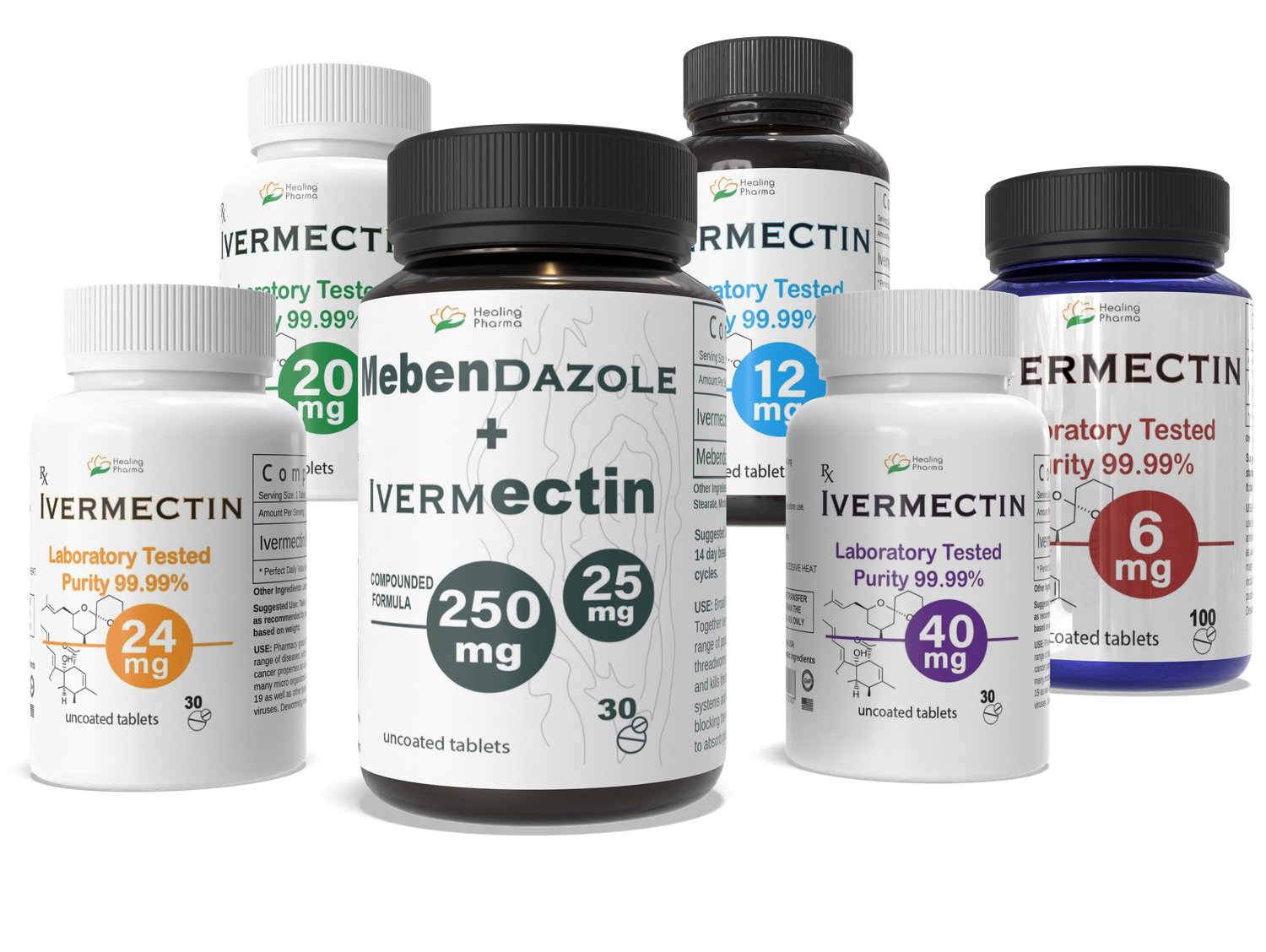
Mebendazole Dosage Guide: What Research and Studies Say
Mebendazole is an FDA-approved antiparasitic drug that is increasingly being studied in cancer research due to its ability to disrupt microtubules, inhibit tumor cell division, and influence metabolic pathways.
Mebendazole dosage in cancer research is actively being studied through clinical trials and experimental protocols, with dosing strategies ranging from standard antiparasitic use to higher sustained regimens. Researchers are investigating how dosage influences tumor biology, particularly when combined with complementary agents like ivermectin that target additional cancer pathways.
Mebendazole Dosage Guide: What Research and Studies Suggest
Mebendazole is emerging as one of the most discussed repurposed drugs in oncology research. Rather than developing entirely new compounds, researchers are investigating how existing medications with established safety profiles may offer new therapeutic possibilities. Mebendazole is frequently discussed alongside ivermectin and fenbendazole in this context.
👉 See our full comparison: Ivermectin vs Mebendazole vs Fenbendazole for Cancer
What makes dosage especially important is that the effects observed in cancer research are not linked to short-term antiparasitic use. Instead, scientists are exploring how sustained exposure, adjusted dosing, and combination strategies may influence tumor growth, metabolic pathways, and immune response.
What Is Mebendazole?
Mebendazole is an FDA-approved antiparasitic drug used to treat infections such as pinworms and other intestinal parasites. It belongs to the benzimidazole class and works by binding to β-tubulin, disrupting microtubule formation and preventing cells from maintaining structural integrity.
This mechanism is also shared with related compounds, which is why these drugs are often discussed together in research.
👉 Learn more: Fenbendazole for Cancer: Research, Mechanisms, and Protocols
This mechanism is highly relevant in oncology. Microtubules are essential for cell division, and disrupting them is a well-established strategy in cancer treatment. A growing body of research available through PubMed has documented how mebendazole may interfere with tumor cell proliferation, which is why researchers are now exploring how dosage affects these outcomes.
Mebendazole is part of a growing group of repurposed drugs being studied in oncology, alongside compounds like ivermectin and fenbendazole.
👉 See our full comparison: Ivermectin vs Mebendazole vs Fenbendazole for Cancer
Why Dosage Is Being Re-Evaluated in Cancer Research
In standard medical use, mebendazole is administered in relatively low doses for short durations. Cancer research, however, operates under a completely different framework.
Researchers are evaluating whether higher or sustained dosing can:
- Maintain continuous pressure on tumor cells
- Reach concentrations effective in tumor tissue
- Enhance synergy with other therapeutic agents
Clinical trials such as NCT01729260 are designed to determine the maximum tolerated dose and optimal dosing schedule in cancer patients. This reflects a structured, step-by-step approach rather than speculation.
Mebendazole Dosage in Research vs Standard Use
| Context | Dose Range | Duration | Purpose |
|---|---|---|---|
| Standard antiparasitic use | 100–200 mg/day | Short-term | Parasite treatment |
| Exploratory discussions | ~100 mg twice daily | Extended | Observational |
| Clinical trials | Dose-escalation (higher levels tested) | Cycles over months | Safety and tumor response |
| Preclinical models | Variable (higher exposure) | Controlled | Tumor inhibition |
Proposed Mechanisms Relevant to Dosage
The reason dosage is being studied so carefully is because mebendazole appears to act through multiple biological pathways. These effects are dose-dependent in many experimental models.
Mebendazole disrupts microtubules, directly interfering with cell division. It has also been shown to affect angiogenesis, potentially limiting the ability of tumors to form new blood vessels. In addition, laboratory studies suggest it may induce apoptosis through cellular stress responses.
There is also increasing interest in how mebendazole interacts with cellular metabolism. This aligns with concepts described in the Metabolic Theory of Cancer, where altering energy production pathways may impact tumor survival.
These combined effects help explain why researchers are not relying on standard dosing—they are exploring how exposure levels influence these mechanisms.
Because dosing varies significantly depending on context, it is often discussed alongside broader protocol strategies.
👉 See: Fenbendazole vs Mebendazole vs Ivermectin Dosage Guide
Mebendazole + Ivermectin: Why the Combination Is Being Explored
One of the most discussed developments in this field is the combination of mebendazole with ivermectin. This interest is based on complementary mechanisms rather than overlap.
Mebendazole primarily targets structural aspects of cancer cells, particularly microtubules and cell division. Ivermectin, by contrast, has been shown in preclinical studies to affect signaling pathways such as WNT/β-catenin and PAK1, as well as mitochondrial function and oxidative stress.
A comprehensive review available on PubMed Central describes ivermectin’s activity across multiple cancer-related pathways, including its effects on tumor proliferation, apoptosis, and the tumor microenvironment.
This creates a clear research hypothesis:
Mebendazole disrupts tumor structure, while ivermectin influences signaling and metabolic pathways. Together, they may target cancer from multiple angles.
More on ivermectin: Ivermectin for Humans: Uses, Dosage & Safety Guide
Why Researchers Are Investigating Ivermectin in Oncology
The interest in ivermectin’s potential role in cancer research is not based on speculation. It is driven by a growing body of preclinical evidence, including laboratory and animal studies, suggesting that ivermectin may influence multiple biological pathways involved in tumor development, progression, and immune response.
These findings have been published in peer-reviewed journals and have led to increased attention from the scientific community, particularly in the context of drug repurposing. While still early-stage, this research is helping define how ivermectin might fit into broader oncology strategies.
Proposed Mechanisms of Action in Cancer
Several mechanisms have been identified in experimental models, each contributing to the rationale for further investigation.
Inhibition of proliferation pathways
Ivermectin has been shown to interfere with signaling pathways such as PAK1 kinase and WNT/β-catenin, both of which are involved in tumor growth and metastasis. A review published in PubMed Central describes how these pathways are disrupted across multiple cancer cell lines.
Induction of apoptosis
Laboratory studies have demonstrated that ivermectin can trigger programmed cell death through mitochondrial dysfunction and increased production of reactive oxygen species (ROS), leading to cellular stress in tumor cells.
Effects on cancer stem cells
Some studies suggest ivermectin may target cancer stem-like cells, which are believed to contribute to treatment resistance and recurrence. This is a key area of interest, as these cells are often not effectively targeted by conventional therapies.
Modulation of the tumor microenvironment
Preclinical data indicate that ivermectin may influence immune-related signaling within tumors, potentially reducing immunosuppressive factors and improving immune system recognition of cancer cells.
Immunogenic cell death (ICD)
A study published in Frontiers in Pharmacology found that ivermectin can induce markers of immunogenic cell death in breast cancer models. This suggests it may help “prime” the immune system to recognize tumor cells more effectively.
Ivermectin and Immunotherapy: The Combination Hypothesis
One of the most active areas of investigation is whether ivermectin can enhance the effectiveness of immune checkpoint inhibitors, such as pembrolizumab.
Immune checkpoint inhibitors work by removing inhibitory signals (“brakes”) on the immune system, allowing it to attack cancer cells. However, many tumors remain resistant because they do not trigger a strong immune response.
The rationale for combining ivermectin with immunotherapy is based on several observations:
- Ivermectin may help convert immunologically “cold” tumors into “hot” tumors that attract immune cells
- It may promote immunogenic cell death, releasing tumor antigens
- It may reduce immunosuppressive signaling in the tumor microenvironment
This trial represents one of the first structured investigations of ivermectin in combination with immunotherapy.
👉 Deep dive: Inside Trial NCT05318469: Can Ivermectin Enhance Immunotherapy?
Clinical Trial: Ivermectin + Immunotherapy in TNBC (NCT05318469)
Triple-negative breast cancer (TNBC) is one of the most aggressive breast cancer subtypes and has limited treatment options, particularly in advanced stages.
An ongoing clinical trial, NCT05318469, is evaluating ivermectin in combination with immunotherapy agents in patients with metastatic TNBC.
This study represents one of the first structured human investigations of ivermectin as an adjunct to immune-based therapy.
Trial Design Overview
| Parameter | Details |
|---|---|
| Trial ID | NCT05318469 |
| Phase | I/II |
| Design | Open-label, single-arm |
| Population | Metastatic TNBC patients |
| Location | Cedars-Sinai Medical Center |
| Estimated Completion | 2026 |
Treatment Protocol
Each treatment cycle lasts 21 days and includes:
- Ivermectin (oral): administered on multiple days within each cycle
- Immunotherapy (IV): pembrolizumab or balstilimab on day 1
The primary goal is to evaluate:
- Safety and tolerability
- Optimal dosing
- Preliminary antitumor activity
Secondary outcomes include response rates and pharmacokinetic interactions.
👉 This trial reflects a key shift:
Not just testing ivermectin alone, but evaluating it as part of a combination strategy
Protocol Stack (Quick Links)
Below are commonly referenced Supplements in this article. Links are provided for convenience — always review the label and consult a professional before use.
90 capsules — 99% purity, laboratory tested
Disclaimer: For convenience only. Consult a licensed professional.
What About Other Cancer Types?
Although the current clinical trial focuses on TNBC, preclinical research has explored ivermectin across a wide range of cancers.
Studies have reported activity in:
- Colorectal cancer (WNT pathway inhibition)
- Glioblastoma (anti-proliferative effects in stem cells)
- Leukemia (selective cytotoxicity in certain cell lines)
- Ovarian and lung cancers (dose-dependent growth inhibition)
This broad activity across multiple cancer types is one reason repurposed drugs continue to gain attention.
👉 Related research: 7 Natural Compounds Scientists Are Studying for Cancer
A large analysis published in eClinicalMedicine also examined population-level data and noted associations that support further investigation.
Ivermectin in the Context of Drug Repurposing
Ivermectin is part of a broader movement in oncology focused on drug repurposing—investigating established medications for new therapeutic roles.
This approach is gaining attention because:
- Safety profiles are already well understood
- Manufacturing and availability are established
- Costs are generally lower than new drug development
Other compounds in this space include mebendazole, fenbendazole, metformin, and statins.
These approaches are often discussed within broader integrative frameworks.
👉 Learn more: Fenbendazole Joe Tippens Protocol: Step-by-Step Guide
Within this framework, ivermectin is being studied not as a replacement for standard therapies, but as a potential complementary agent in combination strategies.
Safety Considerations
Ivermectin has a long history of safe use in approved indications, including parasitic infections. At standard doses, it is generally well tolerated.
However, oncology research may involve:
- Different dosing schedules
- Combination with other agents
- Extended treatment duration
This is why clinical trials such as NCT05318469 include dose-escalation phases to determine safe and effective ranges in cancer patients.
Any use outside approved indications should be approached with medical supervision, ideally within a research or clinical setting.
Because of this variability, dosage discussions should always be viewed within a broader research context.
👉 Read more: Ivermectin Dosage Guide: What Research Suggests
Key Takeaways
- Ivermectin is being actively investigated in cancer research due to multi-pathway biological effects
- Preclinical studies suggest activity across tumor growth, metabolism, and immune response
- The strongest clinical focus is on combination with immunotherapy
- NCT05318469 is a key trial testing ivermectin in metastatic TNBC
- Ivermectin remains investigational in oncology and is not an approved cancer treatment
These ideas align closely with metabolic approaches to cancer research.
👉 See: ISOM Protocol Explained: Metabolic Cancer Strategy
FAQ
Is mebendazole used to treat cancer?
No. Mebendazole is not approved as a cancer treatment and is currently being studied in research settings.
Why is mebendazole being studied for cancer?
Because it disrupts microtubules and may interfere with tumor cell division and growth.
Are there clinical trials for mebendazole in cancer?
Yes. Several early-phase trials are listed on ClinicalTrials.gov.
Is mebendazole safe for humans?
Yes, for approved antiparasitic uses. Off-label use requires medical supervision.
How does it compare to fenbendazole?
Mebendazole is approved for humans, while fenbendazole is primarily veterinary, though both share similar mechanisms.
SCIENTIFIC REFERENCES
Meco D, et al. “Emerging Perspectives on the Antiparasitic Mebendazole as a Drug Repositioned in Oncology.”Cancers (Basel), 2023. PubMed
https://pubmed.ncbi.nlm.nih.gov/36674870/
Guerini AE, et al. “Mebendazole as a Candidate for Drug Repurposing in Oncology.” Cancers (Basel), 2019. PubMed
https://pubmed.ncbi.nlm.nih.gov/31480477/
Juarez M, et al. “Ivermectin: A Systematic Review of Its Anticancer Effects.” Pharmacological Research, 2020. PubMed Central
https://pmc.ncbi.nlm.nih.gov/articles/PMC5835698/
Zhu M, et al. “Ivermectin Induces Immunogenic Cell Death in Breast Cancer.” Frontiers in Pharmacology, 2021. PubMed Central
https://pmc.ncbi.nlm.nih.gov/articles/PMC8419571/
Hellwig MD, et al. “Association Between Ivermectin Use and Cancer Outcomes.” eClinicalMedicine, 2021. PubMed Central
https://pmc.ncbi.nlm.nih.gov/articles/PMC8248985/
Clinical Trial Investigators. “Phase I Study of Mebendazole Therapy in Brain Tumors (NCT01729260).”ClinicalTrials.gov, 2023
https://clinicaltrials.gov/study/NCT01729260
Clinical Trial Investigators. “Ivermectin in Combination With Immunotherapy in Metastatic Triple-Negative Breast Cancer (NCT05318469).” ClinicalTrials.gov, 2023
https://clinicaltrials.gov/study/NCT05318469
FINAL THOUGHTS
The study of mebendazole dosage represents a meaningful shift in oncology, where existing drugs are being re-evaluated through modern scientific frameworks. The integration of combination strategies, clinical trials, and metabolic approaches reflects a rapidly evolving field.
The growing interest in ivermectin and similar compounds highlights a broader movement toward multi-pathway treatment strategies. While research is still ongoing, this area represents a promising direction in the future of cancer research.
As research continues to evolve, understanding how these compounds work together will remain essential.
👉 Explore further: Fenbendazole for Cancer: Research and Protocol Discussions
About the Author
Petra Simmons Ray is a researcher and writer focused on integrative health and emerging medical science, bridging scientific research with holistic perspectives on healing.
Protocol Stack (Quick Links)
Below are commonly referenced Supplements in this article. Links are provided for convenience — always review the label and consult a professional before use.
90 capsules — 99% purity, laboratory tested
Disclaimer: For convenience only. Consult a licensed professional.
This article is for educational purposes only and does not constitute medical advice. Mebendazole is approved for parasitic infections but not for cancer treatment. Always consult a qualified healthcare professional before making medical decisions.