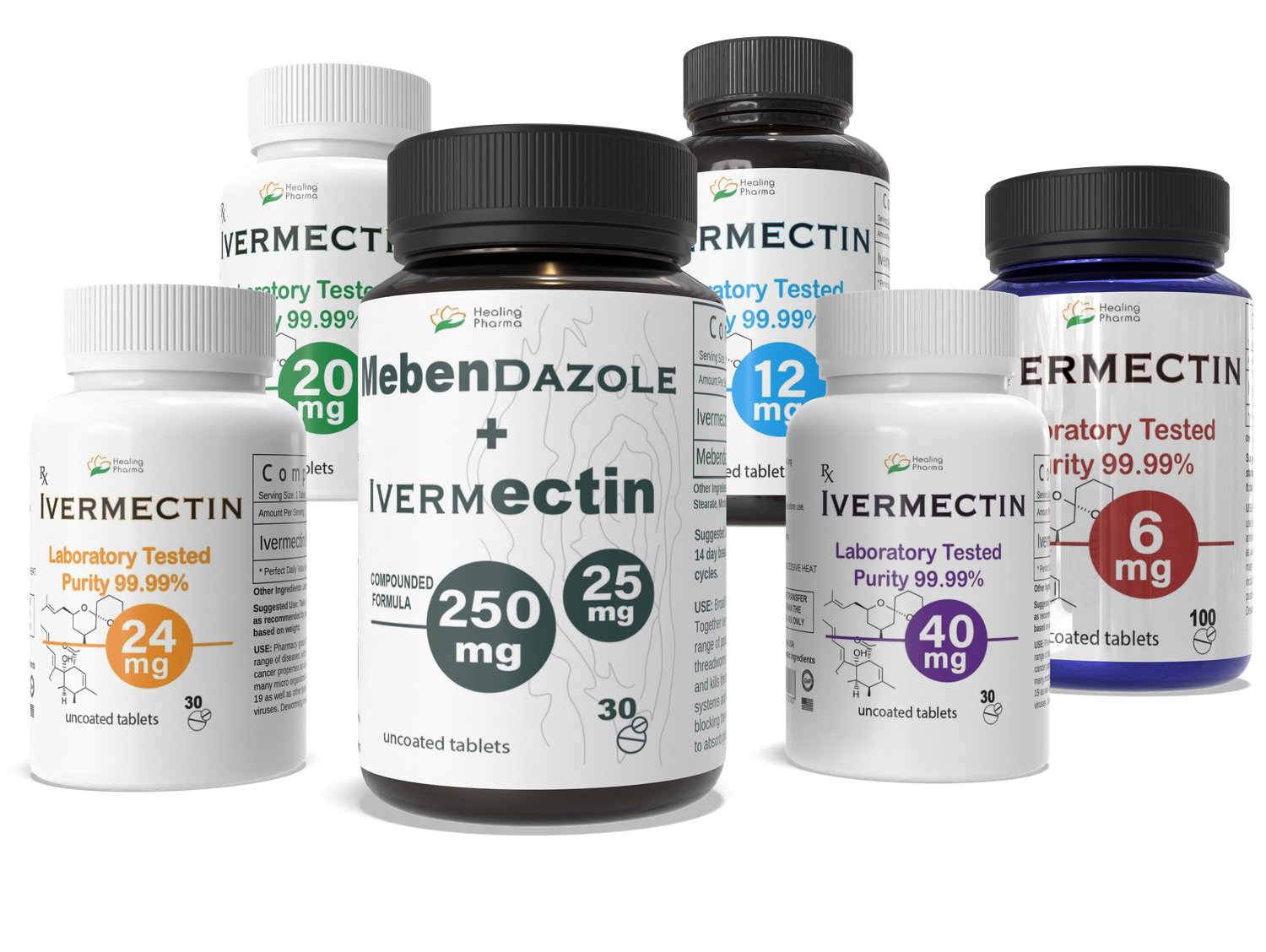
Ivermectin vs Mebendazole vs Fenbendazole for Cancer-Research, Protocols
Research, Protocols, Mechanisms, and Future Treatment Potential
Interest in repurposed antiparasitic drugs for cancer has expanded rapidly in recent years, driven by a deeper understanding of cancer as a complex, multi-system disease rather than a single genetic mutation. Researchers are increasingly exploring how existing medications—particularly those with established safety profiles—may interfere with tumor growth, metabolism, and survival pathways.
Among the most widely discussed compounds are ivermectin, mebendazole, and fenbendazole. While often grouped together, these drugs differ significantly in their mechanisms, research depth, and role within emerging treatment frameworks. What connects them is their growing relevance within multi-target oncology strategies, including well-known approaches such as the Joe Tippens protocol and the ISOM Hybrid Orthomolecular Protocol.
Fenbendazole is often discussed within broader frameworks such as the Joe Tippens protocol and metabolic-based approaches like the ISOM Hybrid Orthomolecular Protocol, both of which emphasize multi-pathway targeting in cancer treatment. This reflects a larger shift in oncology toward combining metabolic, structural, and signaling interventions rather than relying on a single therapeutic mechanism.
Why Repurposed Antiparasitic Drugs Are Being Studied in Cancer
The scientific rationale behind these drugs is grounded in modern cancer biology. Building on the work of Otto Warburg, researchers now recognize that cancer cells rely heavily on altered energy production, increased glucose consumption, and adaptive survival signaling.
These drugs are being studied because they may:
- Disrupt cancer cell metabolism and glucose utilization
- Interfere with microtubule formation and mitosis
- Modulate immune signaling and tumor microenvironment
- Induce apoptosis and oxidative stress
- Influence cancer stem cell survival pathways
Unlike conventional therapies that target a single pathway, these compounds often demonstrate multi-mechanism activity, making them particularly interesting in combination-based protocols.
A growing number of studies indexed in PubMed continue to explore how repurposed drugs may interfere with cancer cell signaling, metabolism, and survival pathways, reinforcing their relevance in future oncology research.
Many emerging protocols utilize cyclical, intermittent, or combination-based dosing strategies designed to target cancer cells while supporting overall system balance.
In integrative oncology discussions, these compounds are often positioned within structured protocols that combine pharmacologic and metabolic interventions.
Ivermectin: Signaling Pathways and Immune Modulation
Ivermectin stands apart from benzimidazole drugs because it primarily acts on cellular signaling pathways rather than structural components. This makes it particularly valuable in strategies focused on tumor adaptability and immune response.
Research suggests ivermectin may:
- Inhibit WNT/β-catenin signaling linked to cancer stem cells
- Affect PI3K/AKT/mTOR pathways involved in tumor growth
- Promote apoptosis and autophagy
- Enhance immune system recognition of tumors
- Improve responsiveness to combination therapies
A Phase I/II clinical trial (NCT05318469) is currently evaluating ivermectin in combination with immunotherapy, highlighting the growing clinical interest in repurposed drugs.
Because of these properties, ivermectin is often positioned as a multi-pathway modulator, particularly useful in integrative protocols designed to weaken cancer cell signaling while enhancing immune function.
A 2020 review in Pharmacological Research documented these mechanisms across multiple cancer cell lines (PMC7505114).
Mebendazole: Microtubule Disruption and Tumor Starvation
Mebendazole is widely regarded as one of the most promising repurposed drugs in oncology due to its direct impact on cancer cell division and tumor infrastructure.
Its primary actions include:
- Binding to β-tubulin, preventing microtubule formation
- Blocking mitosis and halting tumor growth
- Inhibiting angiogenesis (tumor blood supply)
- Reducing glucose uptake in certain cancer models
- Demonstrating synergy with chemotherapy
Drugs like mebendazole and fenbendazole target microtubules, while ivermectin influences signaling pathways, creating a multi-layered approach to disrupting cancer cell survival.
Because it combines structural disruption with metabolic and vascular effects, mebendazole is often considered a core component in multi-drug cancer protocols, particularly those aligned with orthomolecular and metabolic strategies.
Research has shown that mebendazole can disrupt tumor growth through microtubule inhibition (Bai et al., 2011 – https://pubmed.ncbi.nlm.nih.gov/21393568/), supporting its role in repurposed oncology strategies
Fenbendazole: Metabolic Targeting and the Joe Tippens Protocol


Fenbendazole has gained widespread attention due to its association with the Joe Tippens Protocol, which brought global awareness to the potential of metabolic and structural targeting in cancer.
Within this framework, fenbendazole is typically combined with supportive compounds such as:
- Curcumin
- Vitamin E
- CBD oil
The rationale behind this approach includes:
- Increasing oxidative stress within cancer cells
- Disrupting glucose metabolism and energy production
- Destabilizing cellular structure
- Supporting systemic balance
Emerging protocols increasingly combine ivermectin, mebendazole, and metabolic interventions to create a layered approach that targets signaling, structure, and energy pathways simultaneously.
While research is still evolving, fenbendazole remains one of the most discussed compounds in metabolic oncology and repurposed drug strategies.
For a comparison with other antiparasitics, see: Fenbendazole vs. Ivermectin.
The ISOM Hybrid Orthomolecular Protocol
The International Society for Orthomolecular Medicine has contributed to a more structured and research-driven framework for integrating repurposed drugs into cancer care.
This protocol emphasizes:
- Mitochondrial dysfunction as a root driver of cancer
- Targeting metabolic pathways alongside cellular structure
- Combining multiple repurposed drugs
- Supporting the body with vitamins, minerals, and metabolic therapies
The ISOM Hybrid Orthomolecular Protocol incorporates repurposed drugs alongside metabolic therapies, reflecting a growing shift toward system-based cancer treatment strategies.
Side-by-Side Comparison
| Category | Ivermectin | Mebendazole | Fenbendazole |
|---|---|---|---|
| Primary Role | Signaling + immune | Structural + angiogenesis | Metabolic + structural |
| Key Protocols | Emerging integrative | ISOM-aligned | Joe Tippens Protocol |
| Strength | Multi-pathway modulation | Strong research base | Metabolic targeting |
| Clinical Position | Combination support | Core agent | Experimental metabolic |
How These Drugs Are Used in Combination Strategies
One of the most important developments in this field is the move toward combination-based strategies, where multiple mechanisms are targeted simultaneously.
These approaches often include:
- A microtubule inhibitor (mebendazole or fenbendazole)
- A signaling modulator (ivermectin)
- Metabolic therapies (dietary strategies, supplements)
- Immune-supportive interventions
According to data available through ClinicalTrials.gov, interest in repurposed drug combinations continues to grow, particularly in difficult-to-treat cancers.
This layered approach reflects a broader shift toward multi-dimensional oncology, where treatment strategies aim to overwhelm cancer cells from multiple angles.
Conclusion
Ivermectin, mebendazole, and fenbendazole are not simply alternative options—they represent a new direction in cancer research focused on repurposing, metabolism, and multi-pathway targeting.
Key takeaways:
- Ivermectin → signaling pathways and immune modulation
- Mebendazole → microtubule disruption and tumor infrastructure
- Fenbendazole → metabolic stress and protocol-based use
Repurposed drugs like ivermectin, mebendazole, and fenbendazole are helping reshape the conversation around cancer treatment, pointing toward a future built on multi-target, low-toxicity strategies.
As research continues to evolve, these compounds may play an increasingly meaningful role in next-generation oncology approaches.
A growing number of studies indexed on PubMed (https://pubmed.ncbi.nlm.nih.gov) continue to explore repurposed drugs in oncology.
FAQ Section
What is the Joe Tippens Protocol?
A metabolic-based approach using fenbendazole alongside supportive compounds.
What is the ISOM Protocol?
A structured multi-drug and metabolic therapy framework developed by orthomolecular researchers.
Can these drugs be combined?
Emerging protocols explore combination strategies targeting multiple cancer pathways.
Scientific References
Core Cancer Metabolism / Theory
- Warburg O. (1956) – Cancer metabolism
https://www.science.org/doi/10.1126/science.123.3191.309
Mebendazole Research
- Bai RY et al. (2011) – Glioblastoma
https://pubmed.ncbi.nlm.nih.gov/21393568/ - Mukhopadhyay T et al. (2002) – Antitumor effects
https://pubmed.ncbi.nlm.nih.gov/12429654/
Ivermectin Research
- Juarez M et al. (2018) – Anticancer mechanisms
https://www.ncbi.nlm.nih.gov/pmc/articles/PMC5835698/
Fenbendazole Research
-
- Dogra N et al. (2018) – Microtubule disruption
https://www.nature.com/articles/s41598-018-30158-6
- Dogra N et al. (2018) – Microtubule disruption
Protocol Stack (Quick Links)
Below are commonly referenced Supplements in this article. Links are provided for convenience — pharmaceutical-grade, lab-tested.
90 capsules — 99% purity, laboratory tested
Disclaimer: For convenience only. Consult a licensed professional.
About the Author
Petra Simmons Ray is a researcher and writer focused on integrative health and emerging medical science, bridging scientific insight with a deeper understanding of holistic healing and human potential.
Medical Disclaimer
This article is for informational purposes only and reflects emerging research and protocols. It is not medical advice. Always consult a qualified healthcare provider before making medical decisions.