Joe Tippens Fenbendazole Protocol: A Step-by-Step Guide (2026)
The Joe Tippens Protocol gained widespread attention across health forums, social media groups, and alternative wellness communities. What began as one individual’s account eventually evolved into one of the most widely discussed experimental supplement protocols on the internet.
This article provides a comprehensive overview of the protocol, including its origins, the commonly cited regimen, variations that developed over time, the scientific research behind fenbendazole, and important safety considerations.
Important: This content is provided for educational and documentation purposes only and does not constitute medical advice.
The Story Behind the Joe Tippens Protocol
The protocol is named after Joe Tippens, whose story began in 2016 when he was diagnosed with Small Cell Lung Cancer, one of the fastest-growing and most aggressive forms of lung cancer.
Small cell lung cancer is known for its rapid spread and limited treatment options once it reaches advanced stages. At the time of diagnosis, Joe reportedly faced a very poor prognosis.
He began standard cancer treatments including chemotherapy and radiation therapy. According to his public account, he experienced serious side effects during treatment, including complications involving his esophagus that made continuing therapy extremely difficult.
Rather than abandoning treatment entirely, Joe shifted his focus toward recovery, resilience, and supportive health strategies. He later became widely known for openly sharing his journey and the mindset that helped him navigate that period.
The Turning Point
In early 2017, Joe described learning about an unconventional idea through a veterinary connection. He was told that Fenbendazole, an antiparasitic medication widely used in animals, had been discussed by some researchers for potential anti-cancer effects.
He decided to incorporate fenbendazole into his supplement routine along with several additional compounds.
Over the following months, Joe reported significant improvements in his medical scans. His story spread rapidly online, and the routine he described eventually became known as the Joe Tippens Protocol.
The basic combination included: fenbendazole, vitamin E, curcumin, CBD oil

What Is Fenbendazole?
Fenbendazole is a broad-spectrum anthelmintic (deworming medication) that belongs to the benzimidazole class of antiparasitic drugs. It is commonly used in veterinary medicine to eliminate gastrointestinal parasites in dogs, cats, and livestock.
Fenbendazole works by disrupting the parasite’s cellular structure, specifically by binding to tubulin proteins that are necessary for the formation of microtubules. Without functioning microtubules, parasites cannot absorb nutrients and eventually die.
Although fenbendazole is not approved for human use by the FDA, its chemical cousin mebendazole (which shares the same mechanism of action) is an FDA-approved human antiparasitic. Both belong to the benzimidazole family and work by disrupting microtubule formation in cells. Common brand names include Phenbendazole, Panacur or SafeGuard.
For a detailed overview of fenbendazole’s veterinary applications and safety data, see:
Fenbendazole’s Uses in Veterinary Medicine.
Why Scientists Became Interested in Fenbendazole for Cancer
Researchers began exploring benzimidazole drugs such as fenbendazsole for cancer research because their mechanism of action resembles certain chemotherapy drugs.
Specifically, fenbendazole interferes with microtubules, structural components inside cells that play a critical role in cell division.
Cancer cells divide rapidly, making microtubules an attractive therapeutic target.
Several well-known chemotherapy drugs already use this strategy, including: Vincristine, Paclitaxel. These drugs disrupt microtubules, preventing cancer cells from dividing successfully.
Fenbendazole appears to affect similar pathways in laboratory experiments.
Key Scientific Mechanisms Studied
Laboratory research has identified several biological mechanisms through which fenbendazole may influence cancer cells in laboratory settings:
* Microtubule Disruption
Fenbendazole binds to tubulin proteins, preventing proper formation of microtubules. Without these structures, cells cannot successfully complete mitosis (cell division).
When cancer cells fail to divide properly, they often undergo programmed cell death.
* p53 Tumor Suppressor Stabilization
A 2018 study published in Scientific Reports found that fenbendazole increased stability of the p53 tumor suppressor protein in human lung cancer cells.
The p53 protein plays a critical role in preventing damaged cells from continuing to divide. When activated, p53 can trigger apoptosis, the process by which abnormal cells self-destruct.
* Glucose Metabolism Disruption
Cancer cells rely heavily on glucose as a fuel source, a phenomenon known as the Warburg effect.
The same study showed fenbendazole reduced glucose uptake by cancer cells by downregulating GLUT transporters and hexokinase II, effectively starving tumor cells of their primary energy source.
By limiting energy supply, tumor cells may struggle to maintain rapid growth.
* Proteasome Inhibition
Another proposed mechanism involves interference with proteasomes, the cellular machinery responsible for recycling proteins.
Cancer cells depend heavily on proteasome activity to maintain their rapid growth rate. Disrupting this process can create toxic stress inside tumor cells.
Fenbendazole has shown activity against proteasome function, disrupting the protein recycling machinery that cancer cells depend on for rapid growth.
A 2020 review in Pharmacological Research further documented the anticancer potential of benzimidazole compounds, including fenbendazole, across multiple cancer cell lines (PMC7505114).
Important: These findings come from laboratory and animal studies. They do not constitute clinical proof of effectiveness in humans. No controlled clinical trials have yet validated fenbendazole as a cancer treatment.
The Original Joe Tippens Protocol
Below is the most commonly cited version of Joe Tippens’ original protocol, as widely shared across online communities. Dosages are presented as they are frequently quoted — they are not medical recommendations.
Original Protocol (Classic Version)
| Supplement | Dosage | Schedule |
|---|---|---|
| Fenbendazole | 222 mg | Daily for 3 consecutive days, then 4 days off. Repeat weekly. |
| Vitamin E | 400–800 mg | Daily (tocotrienols preferred) |
| Curcumin | 600 mg | Daily (two tablets with meals) |
| CBD Oil | 25 mg | Daily |
Notes:
- Fenbendazole is often suggested to be taken with a meal containing dietary fat to improve absorption.
- Granules reference: approximately 1 g of Panacur/Safe-Guard granules (commonly cited conversion).
- Liquid reference: if using a solution around 100 mg/mL, the commonly cited equivalent is 2.2 mL/day.
✅ Updated Protocol (Later Variation)
Over time, variations of the protocol emerged. The following is a commonly cited “updated” version that some online communities attribute to later discussions around Joe’s routine:
| Component | Dosage | Notes |
|---|---|---|
| Fenbendazole | 222 mg daily | Continuous daily use (no off days in some versions) |
| Onco Adjunct Pathway 1 | 2–4 mL, twice/day | Weight-dependent |
| Onco Adjunct Pathway 2 | 3 capsules, twice/day | Only when off chemotherapy |
| Onco Adjunct Pathway 3 | 1–2 capsules with meals | Part of a lower-sugar dietary strategy |
| Onco Adjunct Pathway 4 | 2 capsules, twice/day | Continuous |
Maintenance Protocols
Some versions of the protocol are presented as long-term “maintenance” schedules for people who have completed an initial course. These frameworks are discussed extensively online but are not standardized medical guidelines.
Post-Remission Maintenance
| Supplement | Dosage | Schedule |
|---|---|---|
| Fenbendazole | 222 mg | 3 times per week (with fat-containing meal), then 4 days off. Repeat. |
| Curcumin | 600 mg | Daily, continuously (no pauses) |
| CBD Oil | 25 mg | Daily, continuously |
General Wellness Maintenance
| Supplement | Dosage | Schedule |
|---|---|---|
| Fenbendazole | 222 mg | 3 times per week with fat-containing meal. 10 weeks on, 10 weeks off. Repeat cycle. |
| Curcumin | 600 mg | Daily, continuously |
| CBD Oil | 25 mg | Daily, continuously |
Fenbendazole Protocol – A Step-by-Step Guide
Protocol #1
Ivermectin and Mebendazole intake from European doctors.
- Ivermectin (25 mg, 7 days a week) or in the case of severe aggressive cancers up to 1mg/kg/day.
- Mebendazole (Dose of 200 - 400 mg/day) or Fenbendazole, commonly taken at 300 mg for six days a week, with doses increasing to up to 1 gram in cases of aggressive cancers.
Protocol #2
Fenbendazole intake:
Fenbendazole 444mg in the treatment of various types of cancer (444 mg 4×/d)
Ivermectin intake:
The dosage for cancer is five to ten times the basic dose, i.e. 1 to 2 mg/kg. A dose of 2 mg/kg is listed in new clinical studies as the maximum safe dose for daily therapy.
Protocol #3
IVERMECTIN INTAKE by itself:
1 mg per kg of body weight per day used for most moderately to highly aggressive tumors 0.5 mg per kg of body weight per day for slower growing cancers Seven days a week.
Three months continues use. Recommended 3 to 6 months
After three months, evaluate either through routine tests or imaging tests, such as CT or PET.
Detailed Individual protocol:
Combined Specific Protocol ( 3 to 6 month treatment recommended )
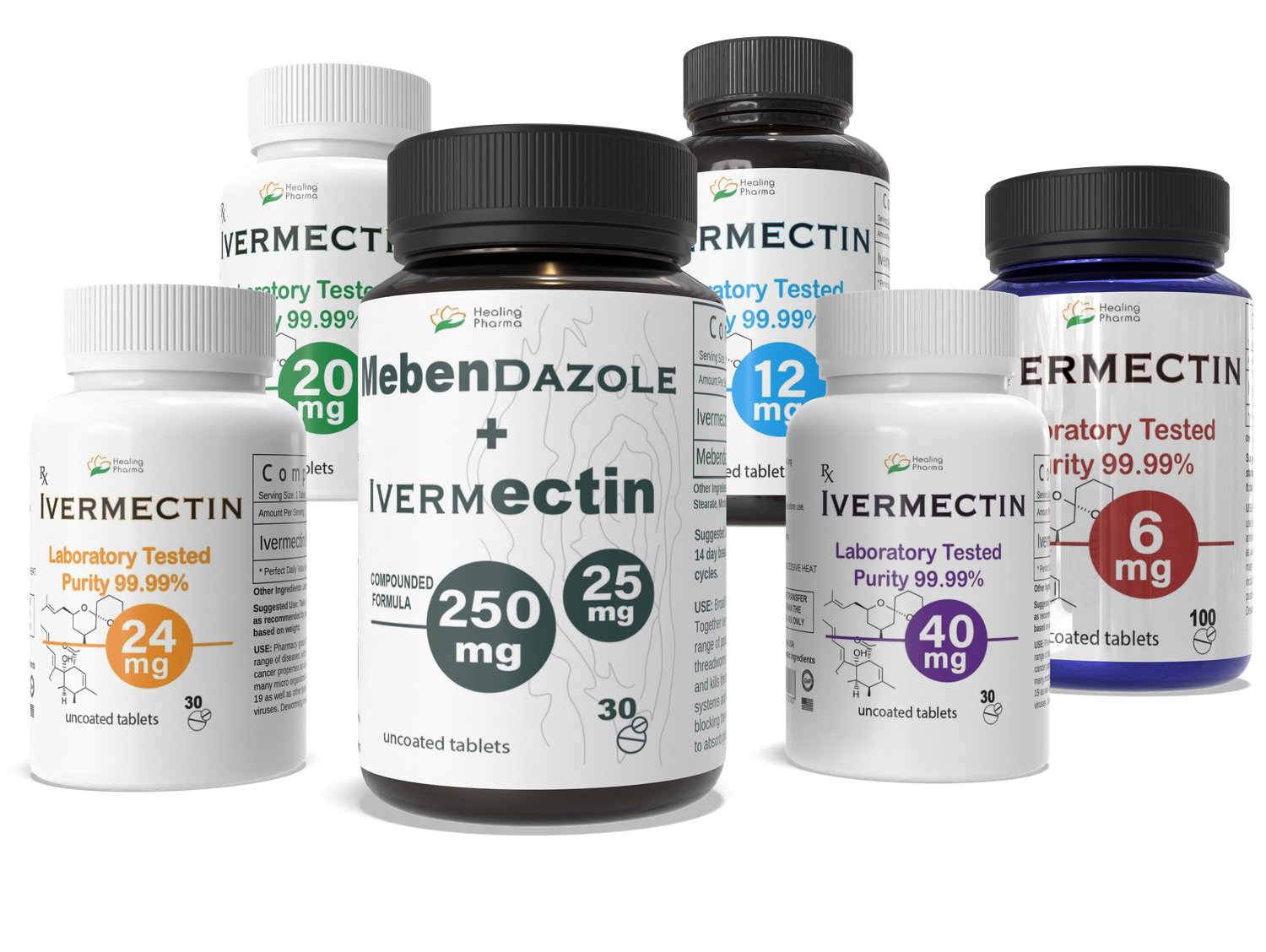
Ivermectin 25mg+ Mebendazole 250mg one tablet per day - 5 days on 2 days off
After 2 days off take Ivermectin 40mg + Fenbendazole 444mg one tablet from each 1x per day - 5 days on 2 days off
After 2 days off take Ivermectin 25mg+ Mebendazole 250mg one tablet 2x per day - 5 days on 2 days off
After 2 days off take Ivermectin 40mg 1x per day
Fenbendazole 444mg one tablet 2x per day - 5 days on 2 days off
After 2 days off take Ivermectin 25mg+ Mebendazole 250mg one tablet 2x per day - 5 days on 2 days off
Three months continues use. Recommended 3 to 6 months
After three months, evaluate either through routine tests or imaging tests, such as CT or PET.
1. Fenbendazole: FenVita

Click here to buy Fenbendazole on Amazon or Ebay
- Healing Pharma Wellness https://wellnesshealthusa.shop/
- Mebendazole, Fenbendazole 100 mg/ml https://wellnesshealthusa.shop/
Related (Cancer Treatment and Research Communications 2022):
Supplements Referenced in the Protocol
The key components of the Joe Tippens protocol — pharmaceutical-grade, with full lab documentation All products are registered with FDA.
90 capsules — 99% purity, laboratory tested
Disclaimer: For convenience only. Consult a licensed professional.
Fenbendazole Dosing and Safety Considerations
One of the most common questions surrounding the Joe Tippens Protocol is dosage safety.
Since fenbendazole is not approved for human use, there are no official dosing guidelines from regulatory agencies.
Several safety factors are commonly discussed.
Veterinary Safety Data:
Animal studies suggest fenbendazole has a relatively wide safety margin. Toxicology studies in dogs and rodents indicate that doses significantly higher than standard veterinary doses were tolerated without major toxicity.
Liver Function Monitoring:
Benzimidazole drugs are metabolized in the liver. Some individuals who discuss using fenbendazole online report periodically monitoring liver enzymes during use.
Drug Interactions:
Fenbendazole may interact with medications metabolized through CYP450 enzyme pathways, potentially altering drug metabolism.
Anyone taking prescription medications should consult a healthcare professional before considering supplements or experimental compounds.
Product Quality:
Because fenbendazole products are manufactured for veterinary use, formulation quality and purity may vary between manufacturers.
For a detailed dosage breakdown and safety analysis, see: How Much Fenbendazole Is Too Much? A Safety-Focused Dosage Guide.
Fenbendazole vs Ivermectin
Another antiparasitic drug frequently discussed in similar contexts is Ivermectin.
Although both drugs are antiparasitics, their proposed anticancer mechanisms differ.
Fenbendazole primarily affects: microtubules, cellular glucose metabolism
Ivermectin has been studied for effects on: PAK1 signaling pathways, WNT-TCF pathways, immune system activation
Some experimental protocols combine both compounds as part of broader metabolic strategies.
Clinical Evidence and Current Limitations
It is important to clearly state that no completed clinical trials have validated the Joe Tippens Protocol as a cancer treatment.
Current evidence includes:
-
laboratory studies on cancer cell lines
-
animal studies
-
anecdotal patient experiences
Meanwhile, related research is progressing. A Phase I/II clinical trial (NCT05318469) at Cedars-Sinai is evaluating ivermectin combined with immunotherapy in metastatic breast cancer — an indication that the scientific community is taking antiparasitic drug repurposing seriously.
Real-world customer experiences with fenbendazole and ivermectin can be found on our Customer Notes & Experiences page. These are personal accounts, not clinical evidence.
Key Takeaways
The Joe Tippens Protocol emerged from one individual’s experience with fenbendazole during cancer treatment between 2016 and 2017.
Key points include:
-
The commonly cited protocol includes 222 mg fenbendazole taken three days per week with vitamin E, curcumin, and CBD oil.
-
Laboratory studies suggest fenbendazole may disrupt cancer cell division and metabolism.
-
No clinical trials have validated fenbendazole as a cancer treatment in humans.
-
Fenbendazole is not approved for human use by the FDA.
-
Anyone considering experimental supplements should consult a qualified healthcare professional.
Scientific References
Dogra N., Kumar A., Mukhopadhyay T. (2018). Fenbendazole acts as a moderate microtubule destabilizing agent and causes cancer cell death by modulating multiple cellular pathways. Scientific Reports.
Tang M., et al. (2020). Ivermectin, a potential anticancer drug derived from an antiparasitic drug. Pharmacological Research.
Son D.S., et al. (2020). The antitumor potentials of benzimidazole anthelmintics as repurposing drugs. Immune Network.
Florio R., et al. (2019). Fenbendazole’s effect on human cancer cells in vitro and its pharmacological relevance. Journal of Biochemical and Molecular Toxicology.
Protocol Stack (Quick Links)
Below are commonly referenced items from the Joe Tippens protocol. Links are provided for convenience — always review the label and consult a professional before use.
90 capsules — 99% purity, laboratory tested
30 capsules — higher dose option
Disclaimer: For convenience only. Consult a licensed professional.
Disclaimer
This article is for informational and educational purposes only. It does not provide medical advice, diagnosis, or treatment recommendations. Always consult a licensed healthcare professional before using any supplements or experimental compounds.
Links are informational and for convenience. This site does not provide medical advice and does not endorse any specific vendor. Always verify product quality, labeling, and consult a licensed professional for health decisions.