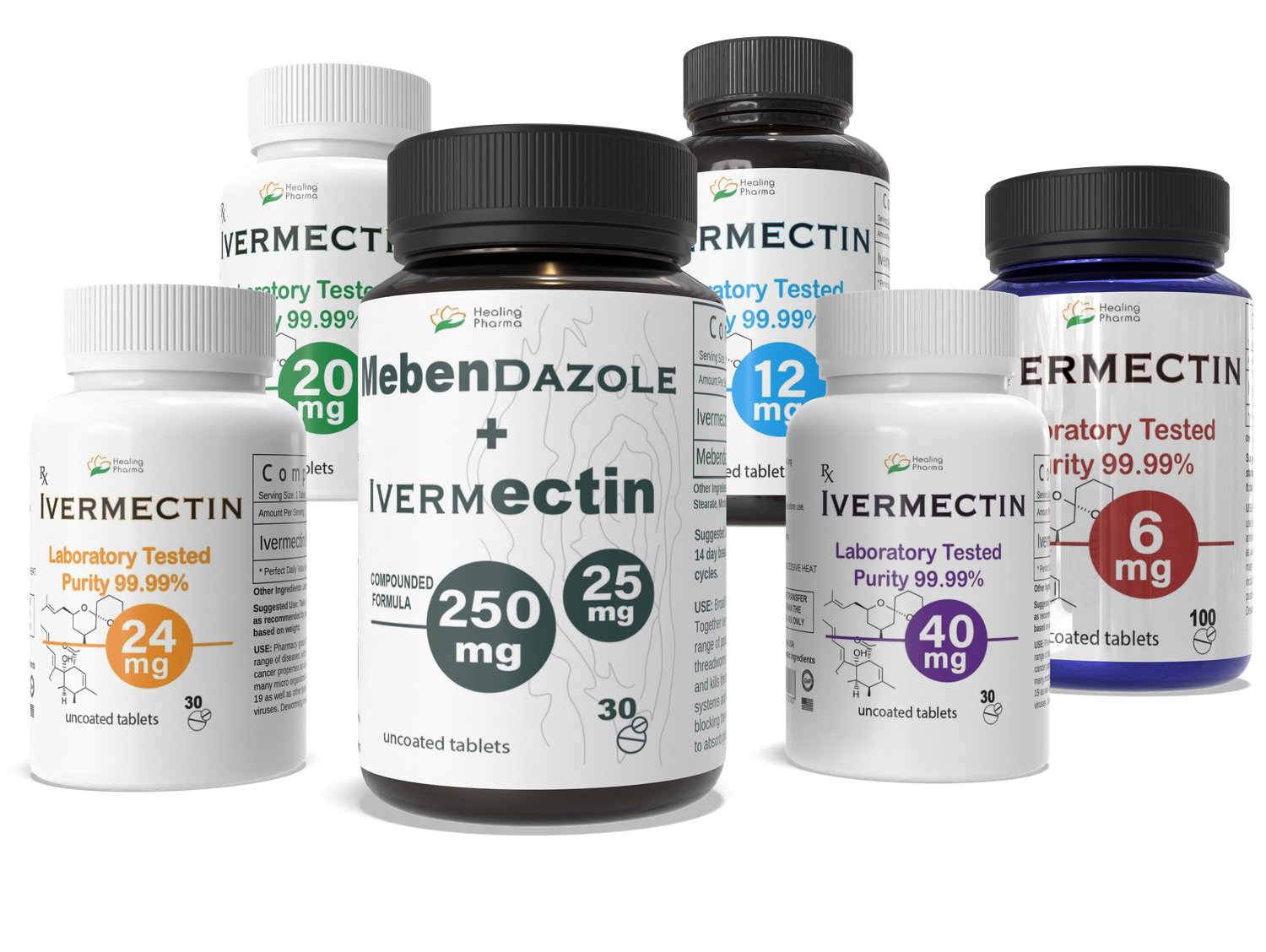
Ivermectin vs Fenbendazole vs Mebendazole Dosage Guide
Fenbendazole, mebendazole, and ivermectin are often used within structured protocols rather than fixed dosing guidelines when discussed in repurposed cancer strategies.
Fenbendazole is commonly associated with cyclical intake such as 3 days on and 4 days off, ivermectin is typically used intermittently based on body weight, and mebendazole is often discussed in continuous daily dosing. These differences reflect their distinct roles within multi-drug frameworks like the Joe Tippens Protocol and approaches aligned with the International Society for Orthomolecular Medicine, where timing, combination, and metabolic targeting are prioritized.
Broader cancer research from the National Cancer Institute continues to reinforce the importance of understanding tumor metabolism, signaling, and resistance pathways.
https://www.cancer.gov
Understanding Dosage in Repurposed Drug Protocols
Unlike conventional medications, dosing strategies for these compounds are often protocol-driven rather than standardized. The goal is not simply to increase dosage, but to:
- Maintain pressure on cancer cell metabolism
- Target multiple biological pathways
- Reduce adaptation and resistance
- Support long-term sustainability
Research has shown that benzimidazole compounds like fenbendazole and mebendazole interfere with microtubules (Dogra et al., 2018 – https://www.nature.com/articles/s41598-018-30158-6), while ivermectin primarily affects signaling pathways. This difference is why their dosing structures are not identical.
According to ClinicalTrials.gov, newer oncology studies are increasingly exploring combination-based strategies involving repurposed compounds.
https://clinicaltrials.gov
Fenbendazole Dosage Guide
Fenbendazole is most commonly used within cyclical protocols, particularly those influenced by the Joe Tippens protocol.
Fenbendazole Dosing Table
| Strategy | Typical Dose Range* | Schedule | Purpose | Notes |
|---|---|---|---|---|
| Cyclical Protocol | ~222 mg/day (commonly discussed) | 3 days ON / 4 OFF | Metabolic stress | Most widely used |
| Continuous Low Dose | Lower daily intake | Daily | Steady pressure | Less common |
| Protocol Combination | Variable | Rotational | Multi-drug synergy | Used in advanced protocols |
*Based on commonly discussed protocols, not standardized medical dosing.
Key Points
- Taken with food (fat improves absorption)
- Often combined with curcumin, vitamin E, CBD
- Focus is on timing and cycling, not dose escalation
A 2021 review published in Biomedicines (PMC8531887) examined fenbendazole's anti-tumor activity in preclinical models, noting its effects on microtubule disruption, glucose uptake interference, and p53 activation in cancer cells. These findings are promising, but it is critical to understand they come from laboratory and animal studies — not human clinical trials.
Ivermectin Dosage Guide
Ivermectin differs significantly because it is used for signaling modulation and immune effects, not structural disruption.
A Phase I/II clinical trial (NCT05318469) is evaluating ivermectin in combination with immunotherapy, highlighting growing clinical interest in repurposed drugs.
Ivermectin Dosing Table
| Strategy | Typical Range* | Frequency | Purpose | Notes |
|---|---|---|---|---|
| Intermittent Protocol | ~0.2–0.4 mg/kg | 2–3x per week | Signaling disruption | Most common |
| Pulse Dosing | Variable | Every few days | Reduce resistance | Based on half-life |
| Combination Use | Adjusted | Protocol-based | Multi-drug synergy | Used with benzimidazoles |
Key Points
- Often weight-based
- Intermittent dosing preferred
- Frequently used in combination protocols
Mebendazole Dosage Guide
Mebendazole is unique because it is approved for human use, making it one of the most studied compounds in repurposed oncology discussions.
Mebendazole Dosing Table
| Strategy | Typical Range* | Frequency | Purpose | Notes |
|---|---|---|---|---|
| Continuous Protocol | 100–500 mg (varies) | Daily | Microtubule inhibition | Most common |
| Divided Dosing | Split doses | 2–3x daily | Maintain levels | Used in protocols |
| Long-Term Use | Variable | Ongoing | Sustained pressure | Investigational use |
Research has shown that mebendazole can inhibit tumor growth through microtubule disruption (Bai et al., 2011 – https://pubmed.ncbi.nlm.nih.gov/21393568/), supporting its role in repurposed oncology strategies.
Human vs Veterinary Context (Important Distinction)
| Drug | Human Approved | Typical Use | Protocol Context |
|---|---|---|---|
| Fenbendazole | No | Veterinary dewormer | Metabolic protocols |
| Ivermectin | Yes | Antiparasitic (human) | Signaling modulation |
| Mebendazole | Yes | Antiparasitic (human) | Structural targeting |
A small 2021 human pilot study published in Scientific Reports (PMC8481218) observed the pharmacokinetics of fenbendazole in healthy human volunteers, noting low oral bioavailability (~20–30%) and a half-life of approximately 6–10 hours. This limited absorption means that dosing strategy and formulation matter considerably.
Full Dosage Comparison (Quick Reference Table)
| Drug | Dosing Style | Frequency | Main Target | Protocol Role |
|---|---|---|---|---|
| Fenbendazole | Cyclical | 3 ON / 4 OFF | Metabolism + structure | Joe Tippens Protocol |
| Ivermectin | Intermittent | 2–3x weekly | Signaling pathways | Combination therapy |
| Mebendazole | Continuous | Daily | Microtubules | ISOM-style protocols |
How These Protocols Work Together
Rather than being alternatives, these drugs are often used together in layered strategies:
- Fenbendazole → metabolic disruption
- Mebendazole → structural inhibition
- Ivermectin → signaling interference
This multi-target approach reflects a growing shift in oncology toward systems-based treatment models, where cancer is addressed through multiple biological pathways simultaneously.
For a deeper breakdown of how these protocols are structured, see your main guide:
Fenbendazole Dosage Guide: How Much Is Too Much?
When Is the Dose Too High?
Fenbendazole's proposed anti-cancer mechanism involves disrupting microtubule formation and inhibiting glucose uptake in cancer cells — as described in a 2020 review in Cancers (PMC40756987)
However, these same mechanisms can affect healthy cells at high doses, particularly in rapidly dividing tissues.
Overwhelming the body with large doses can create unnecessary oxidative stress, especially if your immune system is already compromised. Rather than maximizing dose, many practitioners who follow this space recommend a titration approach:
- Start low (111 mg/day or every other day) and observe your body's response for 1–2 weeks
- Gradually increase to the 222 mg/day 3-on/4-off cycle if well tolerated
- Track both subjective symptoms and objective markers (energy, digestion, bloodwork)
- Take protocol breaks every 2–3 months for liver recovery
In protocol-based strategies, excessive dosing may:
- Increase liver stress
- Reduce sustainability
- Disrupt metabolic balance
- Lead to diminishing returns
Instead, most approaches emphasize:
- Structured cycles
- Combination therapy
- Consistency over intensity
Cancer metabolism research, originally described by Otto Warburg(https://www.science.org/doi/10.1126/science.123.3191.309), supports the idea that targeting energy pathways may be more important than simply increasing dosage.
Conclusion
Fenbendazole, ivermectin, and mebendazole each follow distinct dosing strategies based on their biological roles.
Summary:
- Fenbendazole → cyclical metabolic targeting
- Ivermectin → intermittent signaling modulation
- Mebendazole → continuous structural disruption
Together, they form the foundation of many emerging multi-pathway cancer protocols, where dosing is defined by structure, timing, and combination rather than maximum intake.
Protocol Stack (Quick Links)
Below are commonly referenced Supplements in this article. Links are provided for convenience — pharmaceutical-grade, lab-tested.
90 capsules — 99% purity, laboratory tested
Disclaimer: For convenience only. Consult a licensed professional.
FAQ Section
Which drug is taken daily?
Mebendazole is most commonly discussed as a daily protocol.
Which uses cycling?
Fenbendazole is typically used in a 3 days on, 4 days off cycle.
Why is ivermectin intermittent?
Because of its pharmacokinetics and signaling-based role.
Scientific References
Microbiology (Reading). 2002 Jan;148(Pt 1):247-255. doi: 10.1099/00221287-148-1-247.PMID: 11782517
Dogra N. et al. (2018)https://www.nature.com/articles/s41598-018-30158-6
Bai RY et al. (2011)https://pubmed.ncbi.nlm.nih.gov/21393568/
Warburg O. (1956)https://www.science.org/doi/10.1126/science.123.3191.309
External Links
- PubMed: https://pubmed.ncbi.nlm.nih.gov
- ClinicalTrials.gov: https://clinicaltrials.gov
- National Cancer Institute: https://www.cancer.gov
- Warburg Science paper: https://www.science.org/doi/10.1126/science.123.3191.309
- Bai et al. Neuro-Oncology: https://pubmed.ncbi.nlm.nih.gov/21393568/
- Mukhopadhyay et al. Clinical Cancer Research: https://pubmed.ncbi.nlm.nih.gov/12429654/
- Juarez et al. Am J Cancer Res: https://www.ncbi.nlm.nih.gov/pmc/articles/PMC5835698/
- Dogra et al. Scientific Reports: https://www.nature.com/articles/s41598-018-30158-6
About the Author
Petra Simmons Ray is a researcher and writer focused on integrative health and emerging medical science, bridging scientific research with holistic perspectives.
Medical Disclaimer
This content is for informational purposes only and is not medical advice. Always consult a qualified healthcare provider.