Ivermectin for Humans: Uses, Dosage & Safety Guide
Medical Uses, Intake Protocols, and Emerging Research
Ivermectin is a well-established antiparasitic medication used in humans for conditions such as strongyloidiasis and onchocerciasis, with decades of clinical safety data when used appropriately. In addition to its approved uses, ivermectin is increasingly being studied in emerging research for its effects on cellular signaling, immune modulation, and potential applications in repurposed treatment strategies. Dosage in humans is typically weight-based and often administered intermittently, with safety depending on proper use, medical supervision, and adherence to established guidelines.
What Is Ivermectin?
Ivermectin: A Nobel Prize–Winning Discovery
Ivermectin is often referred to as a “miracle medicine” due to its profound global impact on human health. In 2015, the discovery of ivermectin was awarded the Nobel Prize in Physiology or Medicine, recognizing its role in transforming the treatment of parasitic diseases worldwide.
The award was given to Satoshi Ōmura and William C. Campbell, whose work led to the development of ivermectin from compounds derived from soil bacteria.
Ivermectin has been credited with:
- Helping reduce the burden of river blindness (onchocerciasis) globally
- Contributing to the control of lymphatic filariasis
- Improving public health outcomes in millions of people
- Being distributed in large-scale global health programs
Because of its effectiveness, safety profile, and wide-reaching impact, ivermectin is considered one of the most important antiparasitic drugs ever developed.
According to global health data and research indexed on https://pubmed.ncbi.nlm.nih.gov, ivermectin’s success in infectious disease treatment is one of the strongest examples of how a single compound can transform medicine at a global scale.
In addition to its established medical uses, ivermectin has also been studied in dermatology, particularly in conditions involving microscopic organisms such as Demodex mites, which are explored in more detail in our article on Demodex mites in humans and skin health.
How Ivermectin Works
Ivermectin works by targeting the nervous system of parasites. It binds to glutamate-gated chloride channels, leading to paralysis and death of the parasite.
In addition to its antiparasitic effects, research suggests ivermectin may also influence:
- Cellular signaling pathways (WNT/β-catenin, PI3K/AKT)
- Immune response and inflammation
- Viral replication in certain experimental models
A growing number of studies indexed on PubMed (https://pubmed.ncbi.nlm.nih.gov) continue to explore how ivermectin interacts with cellular pathways beyond its original purpose.
This dual mechanism is not only relevant in infectious disease, but also in skin-related conditions where inflammation and microbial imbalance coexist, as discussed in our Natural Compounds in Inflammation and Skin Health resource.
Approved Medical Uses of Ivermectin
| Condition | Typical Use | Administration | Notes |
|---|---|---|---|
| Strongyloidiasis | Antiparasitic | Oral | Single or short-course dosing |
| Onchocerciasis | Antiparasitic | Oral | Repeated dosing in endemic areas |
| Scabies | Anti-parasitic | Oral / topical | Often requires repeated dose |
| Head lice | Anti-parasitic | Topical | Alternative treatment |
These uses are supported by global health organizations such as the National Cancer Institute (NCI)(https://www.cancer.gov) and broader infectious disease research.
Ivermectin Dosage for Humans
Ivermectin dosing is typically weight-based, measured in milligrams per kilogram (mg/kg).
Standard Medical Dosage Table
| Condition | Typical Dose | Frequency | Notes |
|---|---|---|---|
| Strongyloidiasis | ~0.2 mg/kg | Single dose | May repeat if needed |
| Onchocerciasis | ~0.15 mg/kg | Every 6–12 months | Long-term control |
| Scabies | ~0.2 mg/kg | Repeat after 7–14 days | Often 2 doses |
| Other uses | Variable | Physician-guided | Depends on condition |
For a detailed head-to-head analysis of ivermectin and fenbendazole — including safety profiles, mechanism differences, and human research — see our dedicated Fenbendazole vs. Ivermectin comparison.
Emerging Protocol-Based Use (Research Context)
In integrative and research discussions, ivermectin is often used differently than in standard medical treatment.
Commonly Discussed Protocol Patterns
| Strategy | Typical Range* | Frequency | Purpose | Notes |
|---|---|---|---|---|
| Intermittent Protocol | ~0.2–0.4 mg/kg | 2–3x per week | Signaling modulation | Most common |
| Pulse Dosing | Variable | Every few days | Reduce adaptation | Based on half-life |
| Combination Use | Adjusted | Protocol-based | Multi-pathway targeting | Used with other drugs mebendazole and Fenbendazole |
*These reflect commonly discussed research protocols, not standardized medical treatment.
A Phase I/II clinical trial (NCT05318469) is currently evaluating ivermectin in combination with immunotherapy, highlighting growing clinical interest in repurposed drugs.
Protocol Stack (Quick Links)
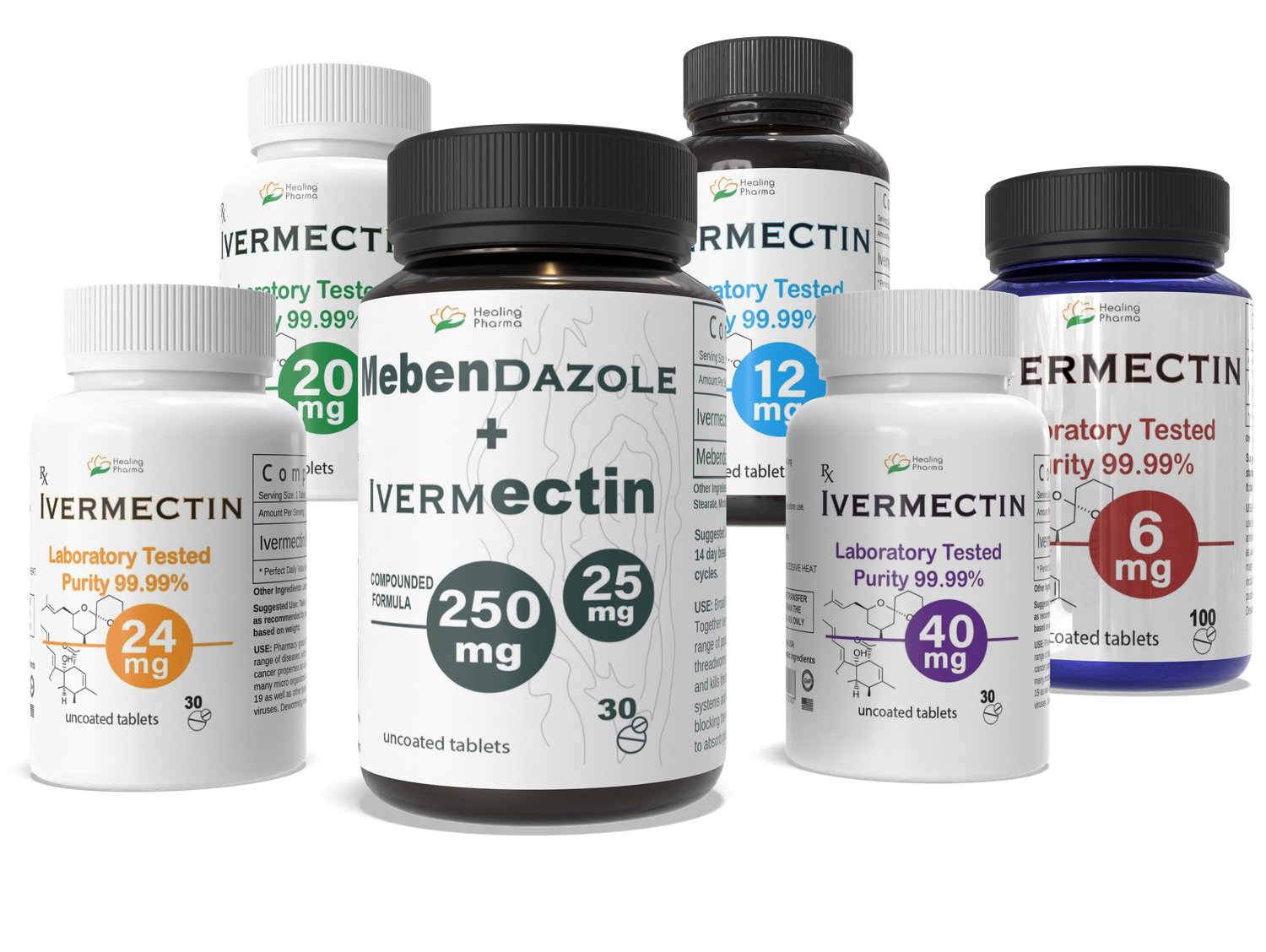
Below are commonly referenced Supplements in this article. Links are provided for convenience — always review the label and consult a professional before use.
90 capsules — 99% purity, laboratory tested
Disclaimer: For convenience only. Consult a licensed professional.
Safety and Side Effects
Ivermectin is generally well tolerated when used correctly, but like any medication, it can produce side effects.
Common Side Effects
- Dizziness
- Nausea
- Mild gastrointestinal discomfort
- Fatigue
Less Common but Important
- Low blood pressure
- Neurological symptoms (at high doses)
- Allergic reactions
Safety depends heavily on:
- Correct dosing
- Medical supervision
- Avoiding excessive intake
When Is Ivermectin Unsafe?
Ivermectin should be used with caution in certain situations:
- Liver impairment
- Interaction with other medications
- High-dose or frequent use outside guidelines
- Use of veterinary formulations
Excessive dosing may increase the risk of neurological effects and toxicity.
Ivermectin in Combination Protocols
Ivermectin is rarely discussed as a standalone compound in emerging research. Instead, it is often part of broader multi-drug strategies.
These may include:
- Benzimidazoles (fenbendazole, mebendazole)
- Metabolic therapies
- Immune-supportive approaches
For a full comparison of how these drugs work together, see:
👉 Ivermectin vs Mebendazole vs Fenbendazole for Cancer
Within frameworks like the International Society for Orthomolecular Medicine, ivermectin is viewed as a signaling component within a larger system targeting metabolism, structure, and immune function.
Why Ivermectin Is Being Studied Beyond Parasites
Modern research is exploring ivermectin because of its multi-pathway potential.
Studies suggest it may:
- Influence cancer cell signaling
- Affect tumor microenvironment
- Enhance immune response
- Work synergistically with other therapies
These mechanisms align with broader shifts in research toward drug repurposing and multi-target treatment strategies.
Conclusion
Ivermectin remains one of the most important and widely used antiparasitic medications in human medicine. Its safety profile, accessibility, and biological activity have made it a strong candidate for continued research beyond its original purpose.
Key takeaways:
- Approved for multiple parasitic infections
- Weight-based dosing is standard in humans
- Emerging protocols use intermittent strategies
- Safety depends on proper dosing and supervision
As research continues, ivermectin may play an increasingly important role in multi-pathway and repurposed treatment strategies.
Ivermectin’s expanding research profile across both dermatology and systemic conditions highlights its versatility, which is further explored in comparisons such as Ivermectin vs Mebendazole vs Fenbendazole.
FAQ Section
What is ivermectin used for in humans?
It is used to treat parasitic infections such as strongyloidiasis and onchocerciasis.
How is ivermectin dosed?
Typically weight-based (mg per kg), depending on the condition.
Is ivermectin safe?
Yes, when used within recommended guidelines and under medical supervision.
Can ivermectin be used long term?
Only under medical supervision and depending on the condition.
Scientific References
- Campbell, W.C. (2012). History of avermectin and ivermectin, with notes on the history of other macrocyclic lactone antiparasitic agents. Current Pharmaceutical Biotechnology, 13(6), 853–865. PubMed
- Crump, A., Ōmura, S. (2011). Ivermectin, 'wonder drug' from Japan: the human use perspective. Proceedings of the Japan Academy, Series B, 87(2), 13–28. PubMed
- González Canga, A. et al. (2008). The pharmacokinetics and interactions of ivermectin in humans — a mini-review. The AAPS Journal, 10(1), 42–46. PubMed
- Juarez, M., Schcolnik-Cabrera, A., Dueñas-Gonzalez, A. (2018). The multitargeted drug ivermectin: from an antiparasitic agent to a repositioned cancer drug. American Journal of Cancer Research, 8(2), 317–331. PubMed
- Laing, R., Gillan, V., Devaney, E. (2017). Ivermectin — old drug, new tricks? Trends in Parasitology, 33(6), 463–472. PubMed
- Ottesen, E.A., Campbell, W.C. (1994). Ivermectin in human medicine. Journal of Antimicrobial Chemotherapy, 34(2), 195–203. PubMed
- Juarez M et al. (2018)https://www.ncbi.nlm.nih.gov/pmc/articles/PMC5835698/
8. Warburg O (1956)https://www.science.org/doi/10.1126/science.123.3191.309
Protocol Stack (Quick Links)
Below are commonly referenced Supplements in this article. Links are provided for convenience — always review the label and consult a professional before use.
90 capsules — 99% purity, laboratory tested
Disclaimer: For convenience only. Consult a licensed professional.
About the Author
Petra Simmons Ray is a researcher and writer focused on integrative health and emerging medical science, bridging scientific research with holistic perspectives on healing.
Medical Disclaimer
This content is for informational purposes only and is not medical advice. Always consult a qualified healthcare professional before making medical decisions.