Ivermectin + Mebendazole in Cancer Care: New Report Shows 84% Clinical Benefit
A newly emerging observational report analyzing 197 cancer patients suggests an 84% clinical benefit ratio (CBR) for the combination of ivermectin and mebendazole. Nearly half of participants reported tumor regression or no evidence of disease, while an additional 36% experienced disease stability. When combined with a growing body of preclinical and early clinical research, these findings highlight the potential of repurposed antiparasitic drugs as adjunct strategies in oncology—though this approach remains investigational and requires validation through controlled clinical trials.
A first-of-its-kind observational report involving 197 cancer patients found that the combination of ivermectin and mebendazole was associated with an 84% clinical benefit ratio, including tumor regression or disease stabilization in most participants. While these findings align with existing preclinical research on both drugs, they are based on non-randomized data and require further validation through large-scale clinical trials before being considered a standard cancer treatment.
Introduction: Why Repurposed Drugs Are Changing Oncology
The Shift Toward Drug Repurposing in Cancer Research
Cancer treatment research is increasingly exploring drug repurposing, a strategy that uses existing medications with known safety profiles for new therapeutic roles. This approach reduces development time, lowers cost barriers, and leverages decades of pharmacological data.
Two of the most discussed candidates in this space are ivermectin and mebendazole, both traditionally used as antiparasitic agents but now being investigated for their potential effects on cancer cell survival and metabolism. For a broader foundation on how repurposed antiparasitic compounds are being studied across oncology, refer to our pillar breakdown on Fenbendazole for Cancer, which explores the wider class of benzimidazole-based therapies and their emerging role in metabolic cancer research.
Two drugs at the center of this movement are:
Both have been used safely for decades and are now being investigated for their ability to interfere with cancer cell survival, metabolism, and replication.
New Clinical Report: 197-Patient Observational Study
A recent observational analysis conducted by The Wellness Company examined 197 cancer patients treated off-label with a combination of ivermectin and mebendazole.
Participants received:
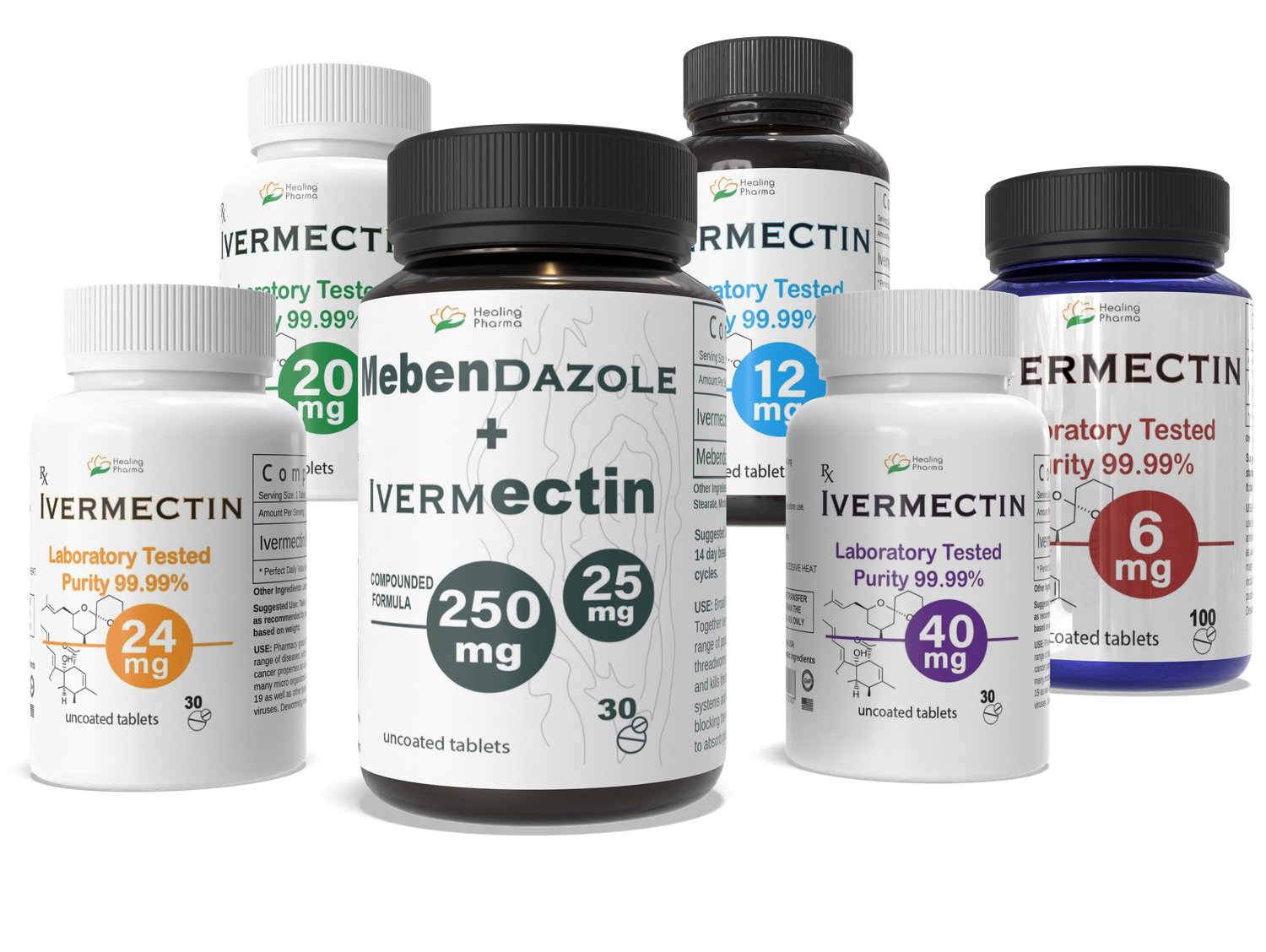
- 25 mg ivermectin
- 250 mg mebendazole
- Oral compounded capsules
- Treatment duration: 6 months
This prospective real-world cohort included a heterogeneous population across multiple cancer types, offering an early glimpse into how this combination may perform outside controlled trial environments.
Clinical Outcomes: Understanding the 84% Benefit Signal
After six months, outcomes were reported as follows:
| Outcome | Percentage |
|---|---|
| Tumor regression / no evidence of disease | 48% |
| Disease stability | 36% |
| Disease progression | 15.6% |
What This Means
The 84% clinical benefit ratio reflects patients who experienced either:
- Tumor reduction
- Disease stabilization
- Symptom improvement
In oncology, disease stability alone can be a meaningful outcome—especially in advanced cancers where progression is expected.
However, critical context is essential:
- Outcomes were self-reported
- No randomized control group
- Patients may have used additional therapies
- Cancer types and stages varied
This makes the findings highly promising—but not yet definitive.
Mechanism of Action Dual Synergy
A Multi-Targeted Approach to Cancer Biology
The scientific interest in combining ivermectin and mebendazole lies in their complementary mechanisms, targeting cancer from different biological angles.
Mebendazole has been widely studied for its ability to disrupt microtubule formation, effectively interfering with cancer cell division and inducing apoptosis. Ivermectin, on the other hand, is being explored for its impact on tumor signaling pathways, mitochondrial function, and potential immune-modulating effects.
When analyzed together, these mechanisms suggest a multi-targeted approach that aligns with evolving cancer models focused on metabolism and cellular signaling. For a deeper comparison of how these compounds differ in mechanism, absorption, and research application, see Fenbendazole vs Mebendazole for Cancer, where their roles are examined side by side in greater detail.
Mebendazole: Microtubule Disruption & Tumor Suppression
Mebendazole interferes with microtubule formation, preventing cancer cells from dividing and replicating.
Research published in Clinical Cancer Research demonstrates that mebendazole can inhibit tumor growth by disrupting mitotic spindle formation and inducing apoptosis
Bai RY et al., Anticancer activity of mebendazole in glioblastoma
Additional studies further confirm that benzimidazole compounds suppress cancer cell proliferation through structural destabilization
Mukhopadhyay T. et al., Benzimidazole compounds in cancer therapy
Ivermectin: Mitochondrial Disruption & Signaling Inhibition
Ivermectin has demonstrated anticancer activity through multiple pathways, including:
- Inhibition of Wnt/β-catenin signaling
- Induction of oxidative stress in tumor cells
- Targeting cancer stem cells
A study published in Scientific Reports showed that ivermectin induces apoptosis in cancer cells through mitochondrial disruption
Dogra N. et al., Ivermectin induces apoptosis in cancer cells
Combined Effect: A Multi-Targeted Cancer Strategy
| Mechanism | Mebendazole | Ivermectin |
|---|---|---|
| Cell division inhibition | ✅ | ❌ |
| Mitochondrial disruption | ❌ | ✅ |
| Cancer stem cell targeting | ⚠️ | ✅ |
| Anti-inflammatory effects | Moderate | Moderate |
The growing interest in combining ivermectin and mebendazole reflects a larger shift toward multi-mechanistic cancer strategies rather than single-target therapies. This approach aims to disrupt cancer progression at multiple biological levels simultaneously, including cell division, energy metabolism, and survival signaling.
This concept closely aligns with structured integrative frameworks such as the ISOM Protocol Explained, which incorporates repurposed drugs alongside metabolic and mitochondrial support strategies designed to address cancer from a systems-based perspective.
This dual-action approach aligns with the Metabolic Theory of Cancer, which suggests that cancer cells rely on altered metabolic pathways and may be vulnerable to therapies targeting both energy production and replication.
What the Researchers Are Saying
According to Peter McCullough:
“Off-label use of ivermectin and mebendazole showed a remarkable 84% clinical benefit ratio in the treatment of cancer.”
He further noted that nearly half of participants reported tumor regression or no current evidence of disease.
Co-author Kelly Victory emphasized that while preclinical evidence has been promising, robust human data has been limited until now.
Expert Perspective: A Call for Further Investigation
Harvey Risch, Professor Emeritus at the Yale School of Public Health, stated:
“We urgently need a full-fledged scientific investigation into this class of medications and their impact on cancer treatment.”
This reflects a growing scientific consensus:
The signal is strong
The mechanism is plausible
But clinical validation is essential
Why This Matters: The Future of Oncology
This report highlights a broader shift toward:
- Drug repurposing strategies
- Metabolic cancer therapies
- Lower-toxicity treatment approaches
In this context, ivermectin and mebendazole represent a potential multi-targeted strategy that may complement existing treatments.
Critical Limitations
Although ivermectin is widely recognized for its antiparasitic use, its emerging role in oncology has introduced new discussions around dosing, safety, and pharmacological behavior in humans. For readers seeking a deeper understanding of how ivermectin is used, including structured dosing discussions and safety considerations, refer to the Ivermectin Dosage Guide, which provides a comprehensive overview grounded in existing pharmacological data and clinical context.
This observational report does not establish causation and should not be interpreted as proof of efficacy.
- Not FDA-approved for cancer treatment
- No randomized clinical trial validation
- Potential reporting bias
Further research is required to determine safety, dosing, and effectiveness.
Protocol Stack (Quick Links)
Below are commonly referenced Supplements in this article. Links are provided for convenience — always review the label and consult a professional before use.
90 capsules — 99% purity, laboratory tested
Disclaimer: For convenience only. Consult a licensed professional.
FAQ
What is the 84% clinical benefit ratio?
It represents the percentage of patients who experienced tumor reduction, disease stabilization, or symptom improvement in the observational study.
Are ivermectin and mebendazole approved for cancer treatment?
No. Both are approved for antiparasitic use but are not approved for oncology.
Why are these drugs being studied for cancer?
Because research suggests they may interfere with cancer cell metabolism, division, and survival pathways.
Is this a proven cancer treatment?
No. These findings are preliminary and require randomized controlled trials.
Scientific References
- Bai RY et al., Anticancer activity of mebendazole in glioblastoma
- Mukhopadhyay T. et al., Benzimidazole compounds in cancer therapy
- Dogra N. et al., Ivermectin induces apoptosis in cancer cells
- Clinical Trial NCT05318469 – Ivermectin in cancer research
About the Author
Petra Simmons Ray is a medical intuitive, researcher, and creator of a structured knowledge hub focused on integrative health, repurposed drug research, and energetic healing. Her work bridges emerging science with holistic insight, delivering high-authority educational content rooted in both research and intuitive understanding.
Final Thoughts
The reported 84% clinical benefit ratio represents one of the most compelling early signals in repurposed oncology therapeutics. While not definitive, it strengthens the case for further investigation into multi-mechanistic, low-toxicity treatment strategies.
The future of this approach now depends on rigorous clinical trials—the step that determines whether promising observations evolve into validated medical breakthroughs.
References
1. Sung H, Ferlay J, Siegel RL, et al. Global cancer statistics 2020: GLOBOCAN estimates
of incidence and mortality worldwide for 36 cancers in 185 countries. CA Cancer J Clin.
2021;71(3):209-249. doi:10.3322/caac.21660
2. Pushpakom S, Iorio F, Eyers PA, et al. Drug repurposing: progress, challenges and
recommendations. Nat Rev Drug Discov. 2019;18(1):41-58. doi:10.1038/nrd.2018.168
3. Tang M, Hu X, Wang Y, et al. Ivermectin, a potential anticancer drug derived from an
antiparasitic drug. Pharmacol Res. 2021;163:105207. doi:10.1016/j.phrs.2020.105207
4. Lai Y, Guan X, Chen X, et al. A review of ivermectin use in cancer patients: is it time to
repurpose ivermectin in cancer treatment? Acta Pol Pharm Drug Res. 2024;81(6):913-
929. doi:10.32383/appdr/200570
5. Robalino KN, Vivanco-Galv.n O, Romero-Benavides JC, Jim.nez-Gaona Y. Ivermectin
as an alternative anticancer agent: a review of its chemical properties and therapeutic
potential. Pharmaceuticals. 2025;18(10):1459. doi:10.3390/ph18101459
6. Kuperwasser C, El-Deiry WS. COVID vaccination and post-infection cancer signals:
Evaluating patterns and potential biological mechanisms. Oncotarget. 2026;17:1-29.
Published 2026 Jan 3. doi:10.18632/oncotarget.28824
7. Guerini AE, Triggiani L, Maddalo M, et al. Mebendazole as a candidate for drug
repurposing in oncology: an extensive review of current literature. Cancers (Basel).
2019;11(9):1284. doi:10.3390/cancers11091284
8. Gonz.lez Canga A, Sahag.n Prieto AM, Diez Li.bana MJ, Fern.ndez Mart.nez N, Sierra
Vega M, Garc.a Vieitez JJ. The pharmacokinetics and interactions of ivermectin in
humans--a mini-review. AAPS J. 2008;10(1):42-46. doi:10.1208/s12248-007-9000-9
9. Parshad S, Sidhu AK, Khan N, Naoum A, Emmenegger U. Metronomic Chemotherapy
for Advanced Prostate Cancer: A Literature Review. J Clin Med. 2022;11(10):2783.
Published 2022 May 15. doi:10.3390/jcm11102783
10. Orlando L, Cardillo A, Rocca A, et al. Prolonged clinical benefit with metronomic
chemotherapy in patients with metastatic breast cancer. Anticancer Drugs.
2006;17(8):961-967. doi:10.1097/01.cad.0000224454.46824.fc
11. Jim.nez-Gaona Y, Vivanco-Galv.n O, Morales-Larreategui G, Cabrera-Bejarano A,
Lakshminarayanan V. Outcome of Ivermectin in Cancer Treatment: An Experience in
Loja-Ecuador. Nurs Rep. 2023;13(1):315-326. Published 2023 Feb 22.
doi:10.3390/nursrep13010030
12. Hegazy SK, El-Azab GA, Zakaria F, Mostafa MF, El-Ghoneimy RA. Mebendazole; from
an anti-parasitic drug to a promising candidate for drug repurposing in colorectal
cancer. Life Sci. 2022;299:120536. doi:10.1016/j.lfs.2022.120536
13. Makis W, Baghli I, Martinez P. Fenbendazole as an Anticancer Agent? A Case Series of
Self-Administration in Three Patients [retracted in: Case Rep Oncol. 2026 Jan
21;19(1):169. doi: 10.1159/000549387.]. Case Rep Oncol. 2025;18(1):856-863.
Published 2025 May 26. doi:10.1159/000546362
14. Yuan Y, Bitar JS, Walker M, Lin D, Lee J, Choi SY, Shiao S, Tighiouart M, Frankel PH,
Lee PP. A phase I/II study evaluating the safety and efficacy of ivermectin in combination
with balstilimab in patients with metastatic triple-negative breast cancer. J Clin Oncol.
2025;43(16_suppl):e13146. doi:10.1200/JCO.2025.43.16_suppl.e13146
15. Kaur B, Blavo C, Parmar MS. Ivermectin: A Multifaceted Drug With a Potential Beyond
Anti-parasitic Therapy. Cureus. 2024;16(3):e56025. Published 2024 Mar 12.
doi:10.7759/cureus.56025
16. Patel Y, Chawla J, Parmar MS. Ivermectin in Cancer Treatment: Should Healthcare
Providers Caution or Explore Its Therapeutic Potential?. Curr Oncol Rep.
2025;27(9):1070-1079. doi:10.1007/s11912-025-01704-z
17. Hu X, Ju Y, Zhang YK. Ivermectin as a potential therapeutic strategy for glioma. J
Neurosci Res. 2024;102(1):e25254. doi:10.1002/jnr.25254
18. Morinaga S, Han Q, Mizuta K, et al. Ivermectin Combined With Recombinant
Methioninase (rMETase) Synergistically Eradicates MiaPaCa-2 Pancreatic Cancer
Cells. Anticancer Res. 2025;45(1):97-103. doi:10.21873/anticanres.17396
19. Hong J, Kwon KY, Jang DG, Kwon T, Yoon H, Park TJ. Mebendazole preferentially
inhibits cilia formation and exerts anticancer activity by synergistically augmenting DNA
damage. Biomed Pharmacother. 2024;174:116434. doi:10.1016/j.biopha.2024.116434
20. Mansoori S, Blom K, Andersson C, Frykn.s M, Larsson R, Nygren P. Characterization of
the anticancer effect of mebendazole and its interaction with standard cytotoxic drugs in
patient tumor cells ex vivo and in an in vivo mouse model. Oncol Rep. 2026;55(1):9.
doi:10.3892/or.2025.9014
21. Meco D, Attin. G, Mastrangelo S, Navarra P, Ruggiero A. Emerging Perspectives on the
Antiparasitic Mebendazole as a Repurposed Drug for the Treatment of Brain Cancers. Int
J Mol Sci. 2023;24(2):1334. Published 2023 Jan 10. doi:10.3390/ijms24021334
22. Al Khzem AH, Gomaa MS, Alturki MS, et al. Drug Repurposing for Cancer Treatment: A
Comprehensive Review. Int J Mol Sci. 2024;25(22):12441. Published 2024 Nov 19.
doi:10.3390/ijms252212441
23. Kolodziej M, Hoverman JR, Garey JS, et al. Benchmarks for value in cancer care: an
analysis of a large commercial population. J Oncol Pract. 2011;7(5):301-306.
doi:10.1200/JOP.2011.000394
Medical Disclaimer
This content is for educational and research purposes only and is not intended as medical advice. These compounds are not approved for cancer treatment. Always consult a licensed healthcare provider before making any medical decisions.
RESEARCH AUTHORS
Continue Your Research
- Fenbendazole for Cancer – foundational guide to benzimidazole compounds and cancer research
- Fenbendazole vs Mebendazole for Cancer – side-by-side comparison of mechanisms and evidence
- ISOM Protocol Explained – metabolic strategy using repurposed drugs
- Ivermectin Dosage Guide – safety, dosing, and clinical context