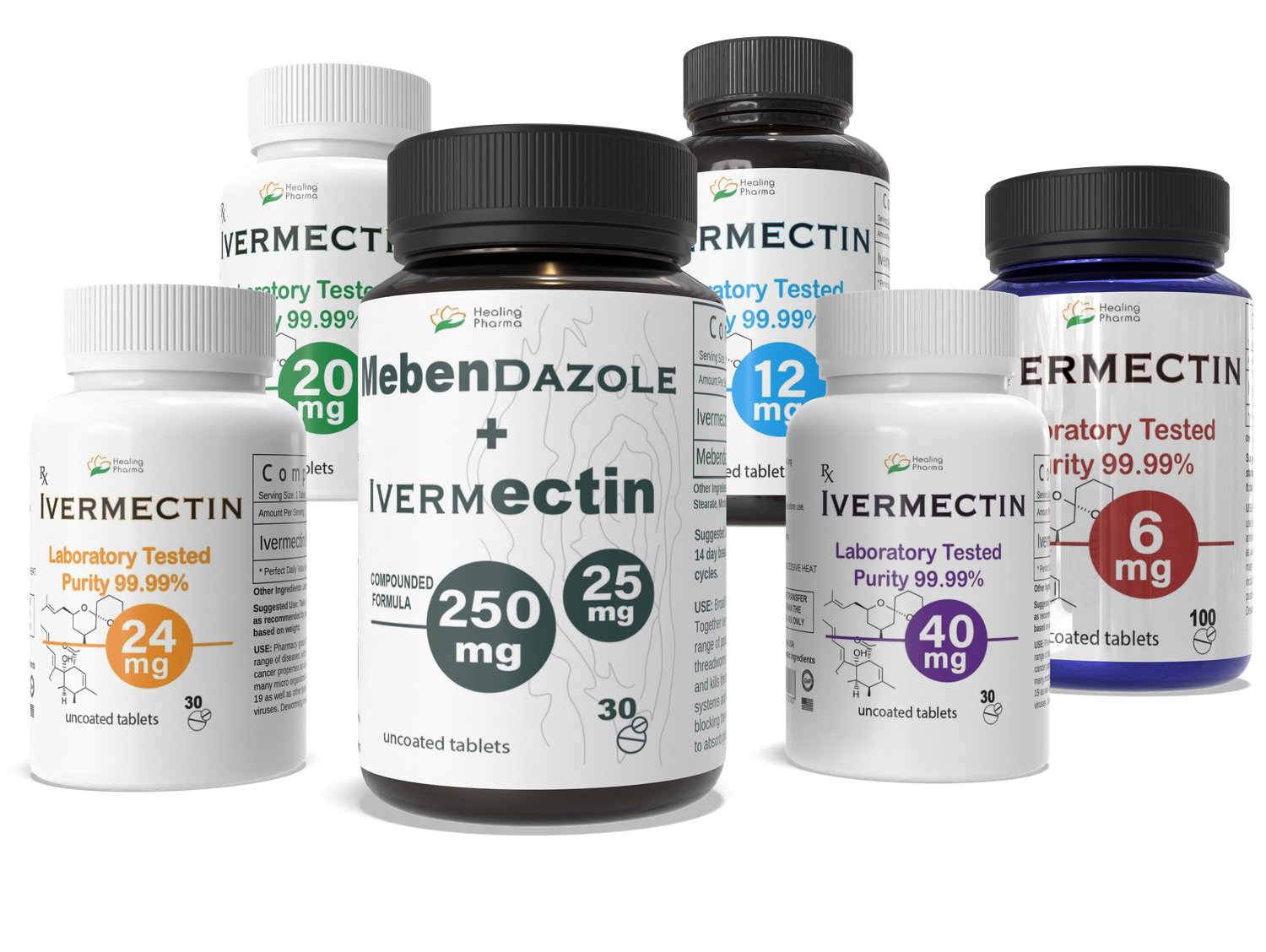
Ivermectin Dosage Guide: What Research and Clinical Trials Suggest
Ivermectin dosage in cancer research is being evaluated through clinical trials and preclinical studies, with dosing strategies that differ significantly from standard antiparasitic use. Researchers are investigating cyclical dosing schedules, combination approaches with immunotherapy, and complementary use with agents like mebendazole to better understand safety, tolerability, and potential anticancer effects.
Ivermectin Dosage Guide
Ivermectin has become one of the most actively discussed repurposed drugs in oncology research. Originally developed as an antiparasitic medication and awarded the Nobel Prize for its global health impact, it is now being studied for its potential effects on tumor biology, immune response, and cellular signaling.
What makes ivermectin particularly important in this context is its multi-pathway activity. Unlike single-target therapies, ivermectin appears to influence several biological systems at once, including proliferation pathways, mitochondrial function, and immune signaling. Because of this complexity, dosage is not a simple extension of standard use — it is a central research question.
👉 Related comparison: Ivermectin vs Mebendazole vs Fenbendazole for Cancer
What Is Ivermectin?
Ivermectin is an FDA-approved medication used to treat parasitic infections such as onchocerciasis and strongyloidiasis. It works by binding to glutamate-gated chloride channels in parasites, leading to paralysis and elimination.
In cancer research, however, ivermectin operates through different mechanisms. Studies available at PMC5835698 show that ivermectin may affect tumor growth, signaling pathways, and mitochondrial activity.
👉 See full overview: Ivermectin for Humans: Uses, Dosage & Safety Guide
Why Dosage Is Being Re-Evaluated
Standard ivermectin dosing is typically weight-based and administered over a short duration. Oncology research is exploring different approaches, including repeated dosing cycles and combination strategies.
Researchers are asking:
- Can cyclical dosing enhance biological effects?
- Does timing influence synergy with immunotherapy?
- What dosing range is both effective and safe in combination therapies?
These questions are being addressed through structured clinical trials rather than observational use.
Ivermectin Dosage in Research vs Standard Use
| Context | Dose Strategy | Duration | Purpose |
|---|---|---|---|
| Standard antiparasitic use | Weight-based (single or short course) | Short-term | Parasite treatment |
| Preclinical studies | Variable (higher concentrations) | Controlled | Tumor inhibition |
| Clinical trials | Cyclical dosing schedules | Multi-cycle | Safety + immune response |
| Combination protocols | Intermittent dosing | Repeated cycles | Synergy with other agents |
🔬 Proposed Mechanisms of Action in Cancer
The rationale for ivermectin in oncology comes from multiple mechanisms identified in laboratory and animal studies.
Inhibition of proliferation pathways
Ivermectin interferes with WNT/β-catenin and PAK1 signaling, both of which are involved in tumor growth and metastasis.PMC7505114
Studies have shown that ivermectin can trigger programmed cell death through mitochondrial dysfunction and reactive oxygen species (ROS) generation.
- Effects on cancer stem cells
Some research suggests ivermectin may target cancer stem-like cells, which are associated with recurrence and treatment resistance.
- Modulation of the tumor microenvironment
Preclinical data indicate ivermectin may reduce immunosuppressive signaling and improve immune cell infiltration within tumors.
- Immunogenic cell death (ICD)
A study published at PMC8419571 demonstrated that ivermectin can induce immunogenic cell death, potentially enhancing immune recognition of cancer cells.
Ivermectin + Mebendazole: Complementary Strategy
Ivermectin is often discussed alongside mebendazole because their mechanisms target different aspects of tumor biology.
Mebendazole disrupts microtubules and cell division, while ivermectin affects signaling pathways, mitochondrial stress, and immune responses.
👉 Full explanation: Mebendazole Dosage Guide: What Research and Studies Suggest
This complementary interaction reflects a broader shift toward multi-target treatment strategies in oncology.
Ivermectin and Immunotherapy: The Primary Clinical Focus
One of the most important areas of investigation is ivermectin’s role in immunotherapy.
Checkpoint inhibitors such as pembrolizumab rely on activating the immune system, but many tumors remain resistant. Ivermectin may enhance this response by:
- Converting “cold” tumors into “hot” tumors
- Increasing antigen presentation
- Reducing immune suppression
Clinical Trial: Ivermectin + Immunotherapy (NCT05318469)
👉 https://clinicaltrials.gov/study/NCT05318469
This Phase I/II trial is evaluating ivermectin in combination with immunotherapy in metastatic triple-negative breast cancer.
Trial Design Overview
| Parameter | Details |
|---|---|
| Trial ID | NCT05318469 |
| Phase | I/II |
| Cancer Type | TNBC |
| Treatment | Ivermectin + Pembrolizumab / Balstilimab |
| Objective | Safety + response |
| Completion | 2026 |
👉 Deep dive: Inside Trial NCT05318469: Can Ivermectin Enhance Immunotherapy?
What About Other Cancer Types?
Preclinical research has explored ivermectin across multiple cancers, including breast cancer, leukemia, glioblastoma, colon cancer, and melanoma.
A large analysis published at PMC8248985 supports continued investigation into its broader role in oncology.
👉 Related: 7 Natural Compounds Scientists Are Studying for Cancer
Ivermectin in Protocol Discussions
Ivermectin is frequently referenced in broader repurposed drug frameworks such as:
- Joe Tippens Protocol
- ISOM Protocol
👉 Learn more:
Fenbendazole Joe Tippens Protocol: Step-by-Step Guide
ISOM Protocol Explained: Metabolic Cancer Strategy
These approaches reflect a growing interest in combining metabolic, structural, and immune-targeting strategies.
Safety Considerations
Ivermectin has a long-established safety profile at approved doses. However, oncology research may involve different dosing schedules and combinations.
Clinical trials are essential to determine safe and effective ranges in these contexts.
Protocol #1
Ivermectin + Mebendazole (European Clinical Approach)
| Component | Dosage | Frequency | Notes |
|---|---|---|---|
| Ivermectin | 25 mg OR up to 1 mg/kg/day (aggressive cases) | Daily (7 days/week) | Higher dosing explored in aggressive cancers |
| Mebendazole | 200–400 mg/day | Daily | Standard range in discussions |
| Fenbendazole (alternative) | 300 mg (up to 1 g in aggressive cases) | 6 days/week | Used as alternative to mebendazole |
Protocol #2
Fenbendazole + Ivermectin (High-Dose Research-Based Approach)
| Component | Dosage | Frequency | Notes |
|---|---|---|---|
| Fenbendazole | 444 mg (up to 4× per day) | Daily | Used in various cancer discussions |
| Ivermectin | 1–2 mg/kg | Daily | 5–10× standard dose explored in research |
| Safety Context | Up to 2 mg/kg/day | — | Referenced as upper safe range in emerging studies |
Protocol #3
Ivermectin Monotherapy Protocol
| Condition | Dosage | Frequency | Duration |
|---|---|---|---|
| Moderate to aggressive tumors | 1 mg/kg/day | Daily (7 days/week) | 3–6 months |
| Slower-growing cancers | 0.5 mg/kg/day | Daily | 3–6 months |
Monitoring & Evaluation (Applies to Protocol #3)
| Phase | Action |
|---|---|
| After 3 months | Evaluate response |
| Methods | CT scan, PET scan, or routine testing |
| Recommendation | Continue up to 6 months based on results |
Specific Combined Protocol (Protocol – Rotational Strategy for aggressive cancer)
Recommended Duration: 3–6 months
| Phase | Protocol | Frequency |
|---|---|---|
| Phase 1 | Ivermectin 25 mg + Mebendazole 250 mg (1 tablet) | 1× daily, 5 days on / 2 days off |
| Phase 2 | Ivermectin 40 mg + Fenbendazole 444 mg (1 tablet each) | 1× daily, 5 days on / 2 days off |
| Phase 3 | Ivermectin 25 mg + Mebendazole 250 mg (1 tablet) | 2× daily, 5 days on / 2 days off |
| Phase 4 | Ivermectin 40 mg (1× daily) + Fenbendazole 444 mg (2× daily) | 5 days on / 2 days off |
| Phase 5 | Ivermectin 25 mg + Mebendazole 250 mg | 2× daily, 5 days on / 2 days off |
Monitoring & Evaluation Protocol
| Phase | Action |
|---|---|
| After 3 months | Evaluate treatment response |
| Methods | CT scan, PET scan, or lab testing |
| Recommendation | Continue up to 6 months depending on results |
Disclaimer:
These protocols are provided for educational and informational purposes only. They are not universally accepted medical guidelines. Always consult a qualified healthcare professional before using any medication or treatment approach.
Protocol Stack (Quick Links to buy)
Below are commonly referenced Supplements in this article. Links are provided for convenience — always review the label and consult a professional before use.
90 capsules — 99% purity, laboratory tested
Disclaimer: For convenience only. Consult a licensed professional.
FAQ
What dosage is used in cancer research?
Varies depending on trial design and combination strategy.
Why combine ivermectin with other drugs?
To target multiple cancer pathways simultaneously.
Are there clinical trials?
Yes, including immunotherapy combination studies.
Is ivermectin approved for Humans?
Yes, Ivermectin is Approved by FDA for human use for parasitic infections.
KEY TAKEAWAYS
- Ivermectin dosage is actively being studied in oncology
- Clinical trials are focused on combination strategies
- Immunotherapy is a key area of research
- Multi-pathway targeting is central to current investigations
- Research is expanding across multiple cancer types
🔬 SCIENTIFIC REFERENCES
Juarez M, et al. “Ivermectin: A Systematic Review of Its Anticancer Effects.” Pharmacological Research, 2020.
https://pmc.ncbi.nlm.nih.gov/articles/PMC5835698/
Zhu M, et al. “Ivermectin Induces Immunogenic Cell Death in Breast Cancer.” Frontiers in Pharmacology, 2021.
https://pmc.ncbi.nlm.nih.gov/articles/PMC8419571/
Hellwig MD, et al. “Association Between Ivermectin Use and Cancer Outcomes.” eClinicalMedicine, 2021.
https://pmc.ncbi.nlm.nih.gov/articles/PMC8248985/
ClinicalTrials.gov. “Ivermectin + Immunotherapy in TNBC (NCT05318469).”
https://clinicaltrials.gov/study/NCT05318469
FINAL THOUGHTS
The investigation of ivermectin in cancer research reflects a meaningful shift toward multi-target and combination-based strategies. The integration of immunotherapy, repurposed drugs, and metabolic approaches represents an evolving and promising direction in oncology.
About the Author
Petra Simmons Ray is a content creator focused on health research, integrative wellness, and emerging scientific insights. Her work explores drug repurposing, metabolic approaches, and evidence-based perspectives on complex conditions. She is dedicated to translating scientific research into clear, accessible, and responsible content for readers seeking deeper understanding.
DISCLAIMER
This article is for educational purposes only and does not constitute medical advice. Ivermectin is approved for parasitic infections but not for cancer treatment. Always consult a qualified healthcare professional before making medical decisions.